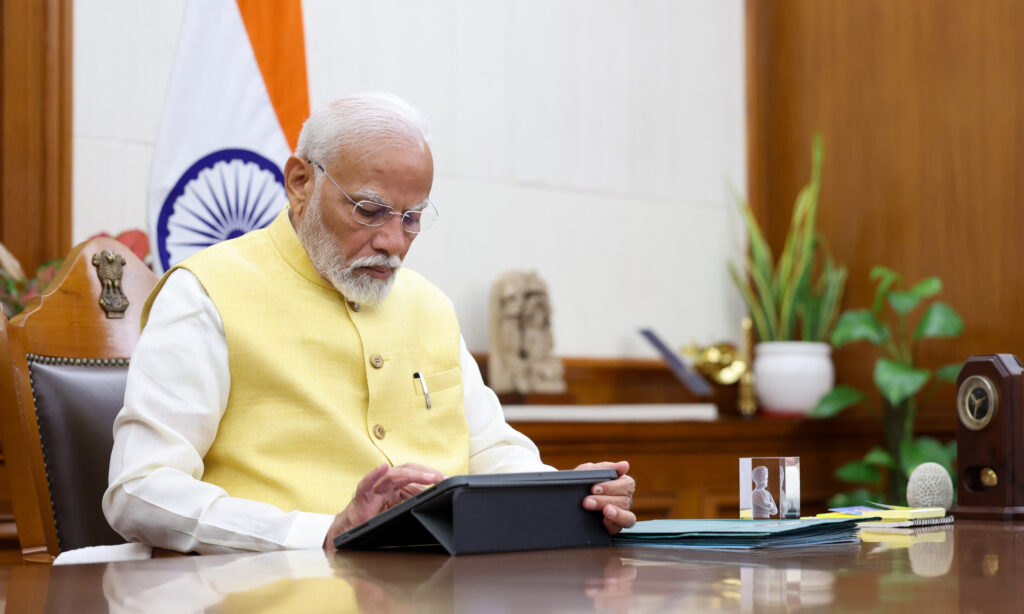
Indian Prime Minister Narendra Modi has said he forgives the young protesters who directed abusive remarks at him during recent demonstrations over examination paper leaks, urging authorities and the public to guide the youths rather than punish them.
Modi made the remarks in a video message posted on social media late Friday, days after youth-led protests erupted in New Delhi and other Indian cities over allegations of widespread examination paper leaks. The demonstrations evolved into broader protests against unemployment, governance and perceived failures in the education system, posing one of the most significant political challenges to his government in recent years.
“The country and the world witnessed what happened at Jantar Mantar. Some mischievous youngsters hurled vile abuses,” Modi said. He added that the insults were directed not only at him but also at his late mother.
“I want to forgive them,” the prime minister said, stressing that mistakes made by young people should be corrected through guidance and education rather than legal action. He argued that dragging students through court proceedings or subjecting them to prolonged punishment would not resolve the underlying issues.
The protests were spearheaded by a group identifying itself as the Cockroach Janta Party (CJP), which mobilised demonstrations demanding accountability over examination paper leaks and reforms to India’s examination system. Videos circulating on social media showed some protesters shouting insults at Modi, prompting police complaints and requests to social media platforms to remove content authorities described as abusive or manipulated.
The unrest eventually led to the resignation of Education Minister Dharmendra Pradhan after sustained public pressure. The Indian government has since announced plans to strengthen safeguards against examination malpractice, including proposing tougher penalties for those involved in paper leaks.
Modi’s conciliatory remarks have drawn mixed political reactions. While supporters praised his call for restraint and reconciliation, opposition leaders criticised the comments, arguing that the government should focus on addressing the grievances that fuelled the protests.