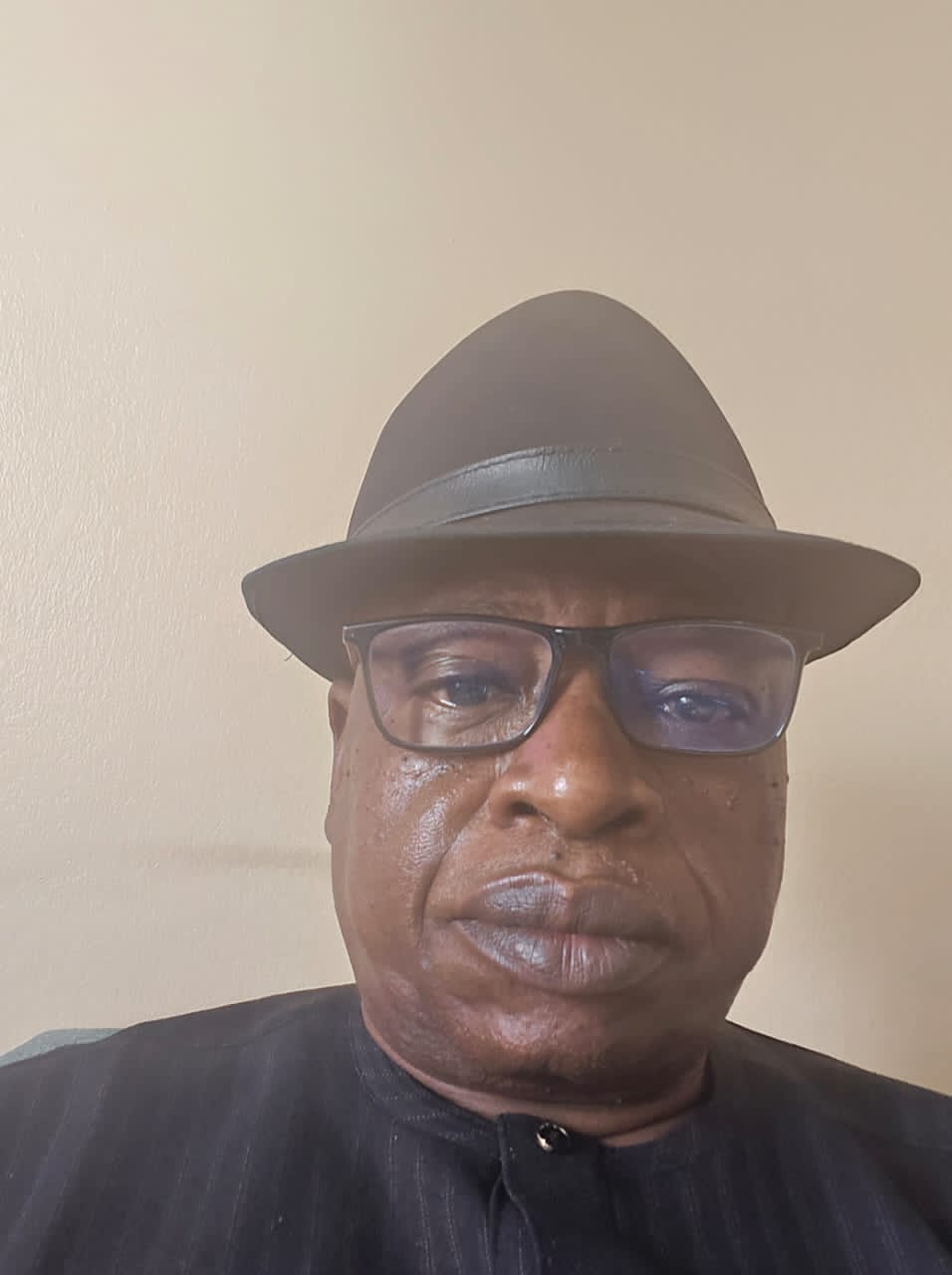
Inuwa Bwala is a veteran journalist and a trained diplomat who describes himself as a circumstantial politician. He twice served as Commissioner for Information, was a Special Adviser on Media in Borno and Nasarawa states, and served twice as a Local Government Chairman in Borno State.
In this interview with Eunice Adeola, he bares his mind on issues shaping and reshaping politics, leadership and the 2027 election in Nigeria. EXCERPTS
What do you have to comment about the country and its political development as 2027 is fast approaching?
Every election year in Nigeria brings forth expectations and challenges, and 2027 is not an exception.
With about six months to the elections, the feelings are a mix of determination, deep scepticism and frustration, and even apathy in some quarters.
From what is playing out, one could see widespread dissatisfaction with the direction of the country, going by the body language of key political players.
I was reading the predictions in recent surveys, which point to about 80% of Nigerians feeling that things are off track.
An SBM Intelligence survey conducted in May 2026 suggests that Nigeria is heading in the wrong direction. According to them, that number cuts across zones, with 92.2% in the South-East, 90.1% in the North-Central and 89% in the South-South.
President Bola Ahmed Tinubu’s net favourability was put at about 58.5%, while opposition figures like Peter Obi were at 58.3%.
In a hypothetical vote today, the SBM poll gave an opposition coalition 57.4% against 11.3% for the APC, which is not a good mark.
If one relies on social media, one could see that the same frustrations seem to re-echo, where people hinge on regional breakdowns of expected favourable votes to predict the President’s outing.
Against the background of the perceived INEC bias in some quarters, people have expressed doubts about the possibility of a free and fair election because the ruling APC, like every ruling party globally, seems determined to win at all costs.
The doubts, especially among the opposition camp, could be seen from the controversies that trailed INEC’s July 2026 update announcing election dates, with people accusing the commission of partisanship.
To me, and more disturbingly, even to the government, is the issue of insecurity, which seems to have overshadowed every gain we could lay claim to.
As part of its selling point, the APC points to what has been described as bold economic reforms as a selling point.
To the government, the gains are beginning to manifest, and that is why allowing the APC to fully implement its economic plans would be necessary.
But, as we all know, the cost of living is the standard yardstick for citizens to measure the impact of economic policies. And as it is, Nigerians are not patient enough with the APC, hence the widespread outcry against living conditions.
The average Nigerian may not give a pass mark to the government in that regard to warrant its re-election.
Coupled with the issue of insecurity, one may gauge the mood of Nigerians to mean the success of the APC is not good enough and its fate hangs in the balance.
What many people fail to note, however, is the fact that the economic downturn and the attendant insecurity did not start with the advent of this administration. They have been around for long, and solving them also requires a longer period.
It was the biggest minus on the scorecard of the Jonathan administration and remained one of the biggest issues that ruined the Buhari era.
The Tinubu administration may have made a miscalculation by promising to end these, knowing that the solution lies far beyond political rhetoric.
Against all the odds, Nigerians are eager to participate in the 2027 elections, but many do not seem to trust the referee.
How do you see the weakening of democratic institutions and narrowing of the political space?
It is perhaps based on the actions of certain agencies of government, including the courts, INEC, the police, the DSS, the EFCC and top government officials, which seem to suggest that the government itself has a hidden agenda.
The average Nigerian feels that the government is deliberately shrinking the political space to allow only the ruling party to operate unhindered.
That is definitely unhealthy.
Opposition, to me, is the soul of competitive democracy, and any attempt to use coercive powers of the state to deny others participation is undemocratic.
But I also observe that the opposition often cries wolf where there is none. They tend to read meanings into every action of the government and create doubts in the minds of the citizenry about government intentions.
By and large, while the ruling APC seems to be dominating the political space, other parties are struggling to survive and participate.
Some say Nigeria is at a labyrinth, and others think foul is fair in the game.
Do you think President Tinubu really has the vision, courage and decisive leadership required to successfully tackle Nigeria’s economic and security challenges?
First and foremost, one will be playing the ostrich to come up and say there are no problems facing the country.
It will be dishonest for one to say one person has the answer to all the problems.
It is not for me to sit down and say President Tinubu has the capacity to address Nigeria’s many problems. Rather, I would look at it from the prism of general policies and our collective will.
The problem with us in Nigeria is the tendency to personalise governance.
Nigeria’s development is not about an individual; it is a collective thing.
We all know that a greater part of the country’s woes were inherited from previous administrations, and I don’t think an individual has the magic wand to turn things around for the better within a short space of time.
I want us to take a closer look at the President’s initiatives and place the same against our attitude as Nigerians.
As a leader, he drives the ideas, but translating the ideas into reality is the job of every Nigerian.
Meaning, we have to give it a chance to succeed.
Governance is a stage. Every leader comes on it and plays his or her part, adding value to what others may have done before.
President Tinubu will address those things he can solve and be honest enough to admit that there are failures in certain areas.