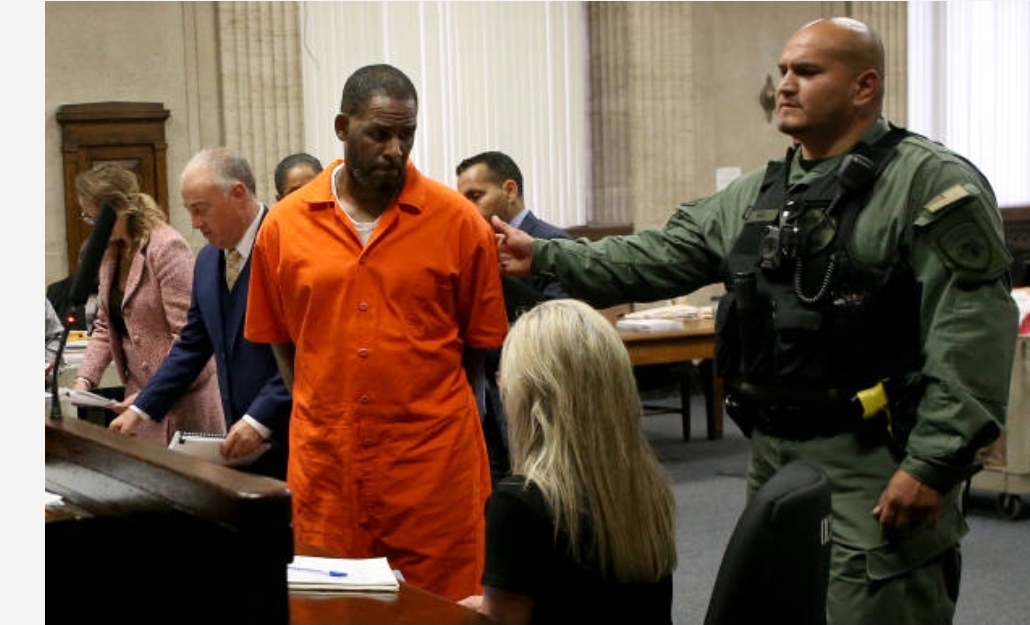
Disgraced American R&B singer R. Kelly has formally appealed to United States President Donald Trump for clemency, seeking a reduction of the 31-year prison sentence he is serving following convictions on federal racketeering and sex trafficking charges.
The request marks the latest legal effort by the singer, whose birth name is Robert Sylvester Kelly, to secure relief from the lengthy prison term imposed after a series of high-profile criminal prosecutions.
According to court filings and reports from his legal team, Kelly is asking the president to exercise his constitutional clemency powers to either commute his sentence or grant other forms of executive relief. His lawyers argue that the sentence is excessive and should be reconsidered.
Kelly is currently serving a combined 31-year prison sentence following separate federal convictions in New York and Illinois. In 2021, he was convicted in New York on racketeering and sex trafficking charges and sentenced to 30 years in prison. A year later, a federal court in Chicago convicted him on child pornography and enticement-related charges, imposing an additional sentence, much of which runs concurrently with his earlier term.
The singer’s legal team has continued to challenge aspects of the convictions and sentences through the appellate process while simultaneously pursuing executive clemency.
Under the United States Constitution, the president has the authority to grant pardons and commute sentences for federal offences. A commutation reduces the length of a prison sentence but does not overturn the underlying conviction, while a pardon forgives the offence without necessarily expunging the conviction.
Legal experts note that applications for presidential clemency are reviewed through established procedures, although the president retains broad discretion in deciding whether to grant or deny such requests.
Kelly rose to international fame in the 1990s and early 2000s with chart-topping hits and multiple Grammy Awards, becoming one of the most commercially successful R&B artists of his generation. However, his career collapsed following years of allegations involving sexual abuse, exploitation and misconduct.
His convictions stemmed from evidence presented by federal prosecutors alleging that he used his celebrity status and professional network to recruit and exploit young women and underage girls over several decades.
The cases attracted widespread public attention and became a defining moment in the broader #MeToo movement, prompting renewed scrutiny of accountability within the entertainment industry.
Victims’ advocates have consistently welcomed the convictions, describing them as a significant step toward justice for survivors of sexual abuse. They have also urged authorities to ensure that the legal process remains focused on the rights and welfare of victims.
As of the time of reporting, the White House has not publicly indicated whether President Trump intends to consider Kelly’s clemency application. The Department of Justice has also not commented on the request.
Unless executive clemency is granted or further legal appeals succeed, Kelly is expected to continue serving his federal prison sentence in accordance with the judgments handed down by the courts.