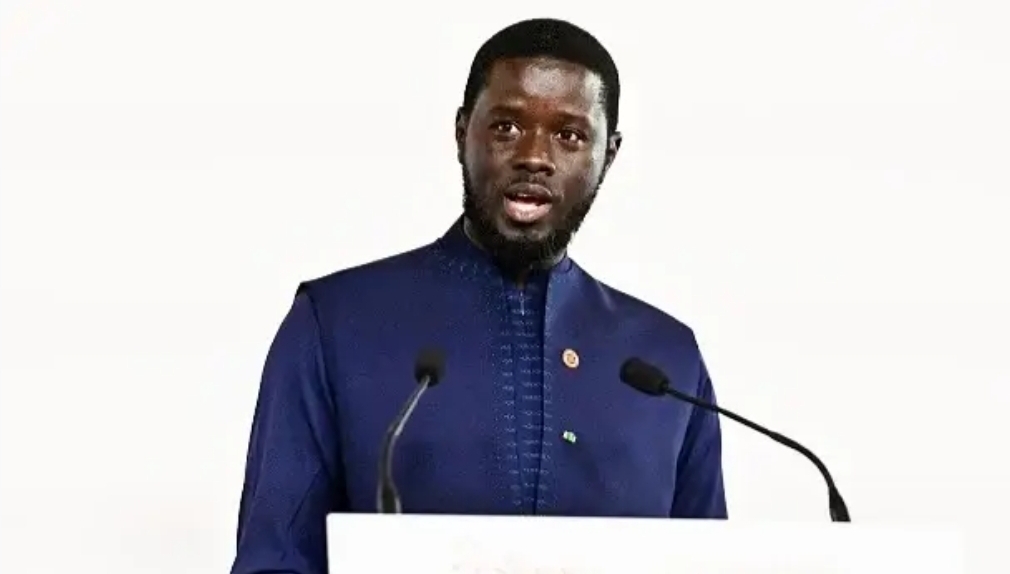
Senegal’s President, Bassirou Diomaye Faye, has been elected the new Chairman of the Authority of Heads of State and Government of the Economic Community of West African States (ECOWAS), succeeding Sierra Leonean President Julius Maada Bio.
Faye’s election was announced at the conclusion of the regional bloc’s summit, where West African leaders met to deliberate on pressing political, economic and security challenges facing the sub-region.
His appointment comes at a critical period for ECOWAS as the organisation grapples with political instability, terrorism, economic integration and strained relations with the Alliance of Sahel States (AES), comprising Mali, Burkina Faso and Niger, which have withdrawn from the bloc.
In his acceptance remarks, President Faye pledged to strengthen regional cooperation and work with member states to address shared challenges, including insecurity, democratic governance, economic development and regional integration.
He also stressed the need for dialogue and unity among West African nations, reaffirming ECOWAS’ commitment to promoting peace, stability and sustainable development across the region.
Faye takes over from President Julius Maada Bio of Sierra Leone, whose tenure as ECOWAS Chairman was marked by efforts to tackle unconstitutional changes of government, deepen regional security cooperation and preserve democratic governance amid a series of military coups in the region.
During Bio’s leadership, ECOWAS also intensified diplomatic engagements with transitional governments in Mali, Burkina Faso and Niger while confronting the growing threat posed by terrorism and violent extremism across the Sahel.
As the new chairman, Faye is expected to lead discussions on restoring constitutional order in countries under military rule, strengthening the bloc’s collective response to terrorism and advancing the implementation of the ECOWAS Trade Liberalisation Scheme and other economic integration initiatives.
Analysts believe his leadership will also be tested by the challenge of rebuilding trust within the regional bloc following the withdrawal of the three Sahel nations and ongoing efforts to maintain regional cohesion.
Since assuming office as President of Senegal, Faye has positioned himself as a reform-minded leader, advocating stronger regional partnerships, economic self-reliance and improved governance.
Observers say his election reflects the confidence of West African leaders in his ability to steer the organisation through a period of significant political and security challenges.
Founded in 1975, ECOWAS comprises 12 member states following the exit of Mali, Burkina Faso and Niger. The organisation plays a central role in promoting economic integration, regional peace, conflict resolution and democratic governance across West Africa.
With Faye now at the helm, attention is expected to focus on how the regional bloc navigates its evolving security landscape, strengthens economic cooperation and fosters renewed dialogue among member states in pursuit of greater regional stability.