
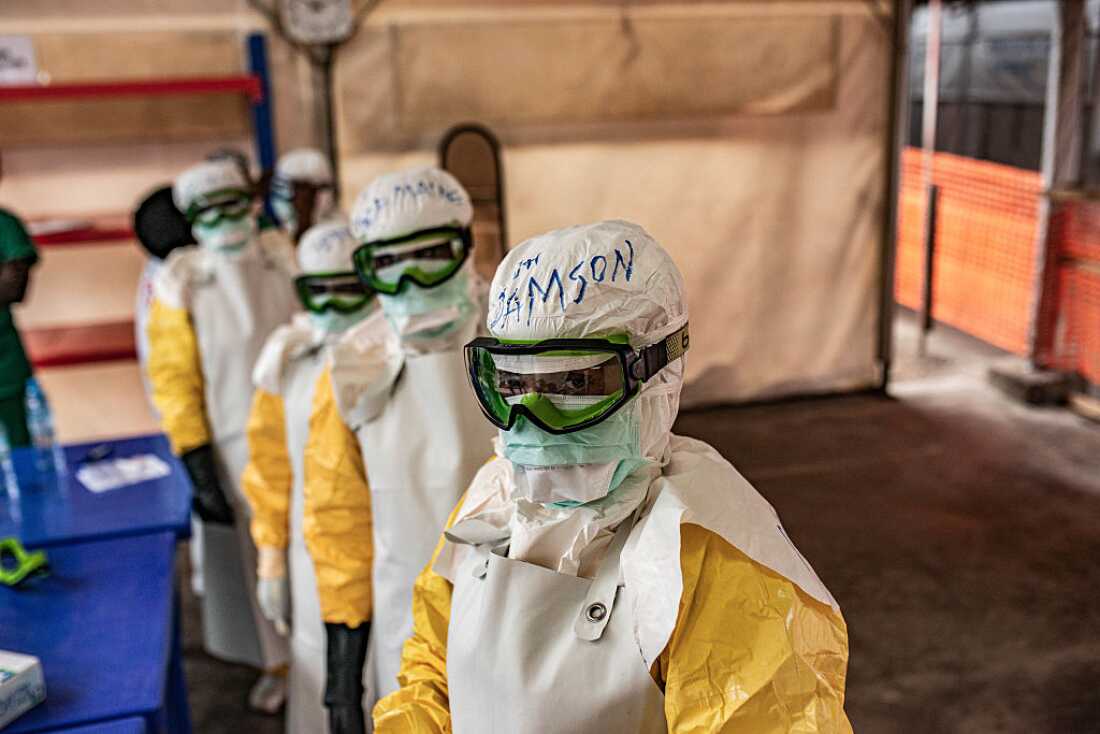
The World Health Organization (WHO) has reported nearly 500 confirmed cases of Ebola in an outbreak affecting parts of Central Africa, raising concerns about the rapid spread of the disease and the strain on regional health systems.
According to the WHO’s latest update, 452 confirmed cases, including 82 deaths, have been recorded in the Democratic Republic of Congo (DRC), where the outbreak was officially declared in May. In neighbouring Uganda, health authorities have confirmed 19 cases and two deaths, bringing the total number of confirmed infections across the affected region to 471, with 84 fatalities.
Health officials say the outbreak is being driven by community transmission, particularly in eastern DRC, where insecurity, population displacement, and limited healthcare infrastructure have complicated containment efforts. Cases have been reported across multiple health zones in the country’s Ituri, North Kivu, and South Kivu provinces.
The WHO has classified the outbreak as a public health emergency of international concern and is coordinating response efforts with national governments, the Africa Centres for Disease Control and Prevention (Africa CDC), and international partners. The agency has launched a multi-million-dollar response plan aimed at strengthening surveillance, treatment, vaccination efforts, and border screening.
Public health experts have warned that the outbreak could expand significantly if aggressive containment measures are not maintained. Recent modelling by the U.S. Centers for Disease Control and Prevention (CDC) suggests that the number of cases could rise substantially in the absence of effective interventions.
Ebola is a severe viral disease that can spread through direct contact with the bodily fluids of infected individuals. Symptoms often include fever, fatigue, muscle pain, vomiting, diarrhoea, and, in severe cases, internal and external bleeding. The WHO notes that past outbreaks have recorded fatality rates ranging from 25 to 90 percent, depending on the strain and access to treatment.
Despite the rising case count, health authorities continue to emphasize that early detection, isolation of patients, contact tracing, and community awareness remain critical tools in controlling the outbreak. International health agencies have also intensified support for affected countries to prevent further cross-border transmission.
The current outbreak is among the most serious Ebola emergencies in recent years and has prompted renewed calls for sustained international assistance to help contain the virus before it spreads further across the region.