
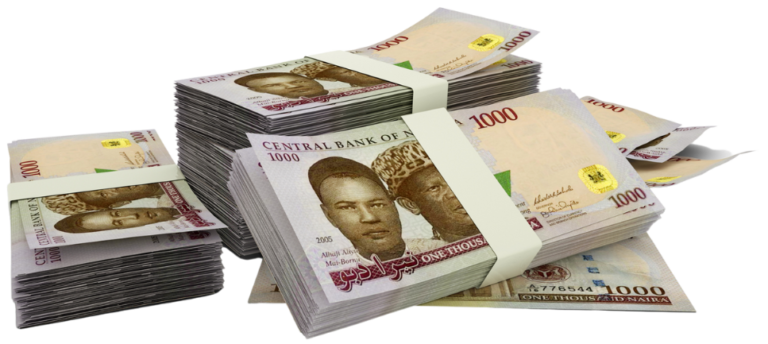
For many Nigerian households, earning ₦100,000 a month is no longer simply a question of having a modest income. It is increasingly a question of how far that income can stretch in an economy where food, transport, housing, healthcare and education continue to consume a large share of household earnings.
Nigeria’s national minimum wage remains ₦70,000 per month, following the 2024 wage increase, although some states have adopted higher minimum wages. Lagos State, for example, has announced a ₦85,000 minimum wage.
That means a worker earning ₦100,000 is only ₦30,000 above the national minimum wage. For a household with dependants, the difference can disappear quickly once basic expenses are paid.
The latest available inflation figures also show why households continue to feel pressure despite the recent moderation in headline inflation. Nigeria’s headline inflation rate stood at 15.91 per cent in June 2026, while food inflation rose to 17.52 per cent.
For a family of four, even a very basic monthly budget can quickly exceed ₦100,000. Food alone can consume a significant portion of the income, particularly when the household buys staples such as rice, beans, garri, yam, vegetables, meat and cooking ingredients.
Transportation adds another burden, especially for workers who commute daily. A worker spending ₦1,000 a day on transportation for 22 working days would spend about ₦22,000 in a month, leaving ₦78,000 from a ₦100,000 salary before food, rent, electricity, healthcare or other expenses are considered.
Housing can make the situation even more difficult. Although rent is often paid annually rather than monthly, households have to set aside part of their income to meet the eventual payment. In major urban centres, particularly Lagos and Abuja, housing costs can consume a substantial portion of a low-income worker’s earnings.
The pressure is not limited to food and housing. Electricity, mobile data, school expenses, healthcare, clothing and unexpected emergencies can quickly push a household beyond its monthly income.
Recent analysis of Nigeria’s cost-of-living crisis has highlighted how inflation, the naira’s depreciation, fuel subsidy removal and stagnant incomes have weakened household purchasing power.
This is why a salary can appear reasonable on paper but feel inadequate in practice.
For a single person living with family or sharing accommodation, ₦100,000 may provide a difficult but potentially manageable monthly budget if expenses are carefully controlled. For a household supporting a spouse and children, however, the challenge is considerably greater.
The question also goes beyond whether a family can technically survive. It is about what kind of life that income can provide.
A household surviving on ₦100,000 may have little or nothing left for savings, investment, emergencies or long-term planning after meeting basic needs. One unexpected medical bill, school expense or urgent family obligation can completely disrupt the budget.
The situation has also fuelled renewed debate over what constitutes a realistic living wage in Nigeria. Labour leaders have argued that the current ₦70,000 minimum wage is increasingly inadequate given prevailing living costs.
For millions of Nigerians, therefore, the challenge is not simply finding employment. It is finding employment that provides enough income to live with some degree of financial security.
As Nigeria heads deeper into 2026, the ₦100,000 salary question offers a revealing measure of the country’s cost-of-living crisis.
Can a Nigerian family survive on ₦100,000 a month? Technically, some may. But for a family with children, rent, transport and other basic obligations, surviving on that income can mean making difficult choices every single month — with little room for savings, emergencies or a better future.