
₦600bn given to 10 million households: Where are the beneficiaries?
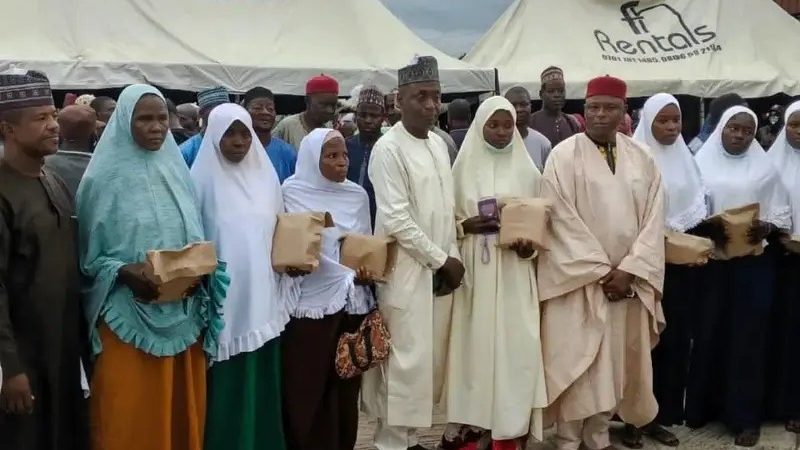
The Federal Government says it has disbursed more than ₦600 billion in cash transfers to vulnerable Nigerians over the past three years, with the intervention reaching slightly more than 10 million households.
The Minister of Humanitarian Affairs and Poverty Reduction, Bernard Doro, disclosed the figures during an interview on Channels Television’s Politics Today on Wednesday, following the launch of a new $1 billion social protection programme.
Doro said the cash-transfer programme was designed to provide direct support to poor and vulnerable households amid economic hardship, while the government is now seeking to shift from short-term relief towards interventions that can help families become economically self-reliant.
“We’ve done over ₦600 billion in cash transfers to be able to support vulnerable Nigerians within three years. We have reached slightly over 10 million households,” Doro said.
The minister said the government is changing its approach to poverty reduction by tracking beneficiaries and assessing whether social protection interventions are helping households improve their economic circumstances.
“We have a system where we want to deliberately track poverty,” Doro said.
The announcement comes as the Federal Government launches the $1 billion Renewed Hope Social Protection Programme, which includes the Household Prosperity and Empowerment Social Protection Project, known as HOPE-SP.
The new initiative is intended to strengthen coordination among humanitarian assistance, social protection and poverty-reduction programmes.
Under the programme, about 7.6 million vulnerable households are targeted for support, with eligible households expected to receive a one-off ₦40,000 digital shock-response transfer. Beneficiaries are to be selected from the National Social Register and validated using their National Identification Numbers.
While the government’s ₦600 billion figure represents a substantial investment in social protection, the amount disbursed and number of households reached do not, by themselves, establish how many beneficiaries have actually moved out of poverty.
Doro’s disclosure was made in response to a question about how many Nigerians the administration had lifted out of poverty. However, he did not provide a specific figure for the number of beneficiaries who had crossed the poverty line as a result of the cash transfers.
This distinction is significant because temporary financial assistance and sustained poverty reduction are not the same outcome. Measuring the programme’s effectiveness requires tracking beneficiaries over time to determine whether transfers have improved household income, food security, employment, assets and overall living conditions.
The government says the new social protection framework is intended to address that challenge by placing greater emphasis on economic empowerment rather than cash assistance alone.
The HOPE-SP programme is expected to track households’ progress and support their transition towards greater economic independence.
The government has also reported other interventions aimed at improving livelihoods. In Imo State, for example, the Humanitarian Affairs Ministry said more than 278,000 beneficiaries had received over ₦6.6 billion through a household cash-transfer programme, with payments linked to verified beneficiaries and their NINs.
As the Federal Government expands its social protection programmes, the central question will increasingly be whether the billions being spent translate into measurable and lasting improvements in the lives of vulnerable Nigerians, rather than providing only temporary relief from economic hardship.