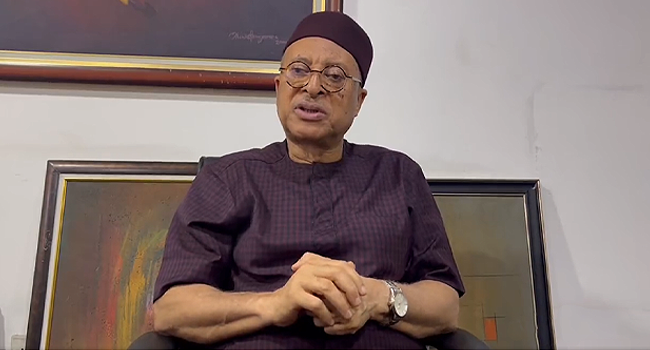
Political economist Prof. Pat Utomi has warned that Nigeria is drifting toward what he called a “revenge of the poor,” urging citizens to turn out en masse for the 2027 general elections as the surest way to translate widespread hunger and anger into political change.
Utomi made the remarks at a briefing on the state of the nation and the 2027 elections held in Lagos on Wednesday, where he said the level of poverty, hunger and anger among Nigerians was becoming increasingly palpable.
Utomi said the deteriorating economic conditions had been compounded by persistent insecurity and declining public confidence in the judiciary and other state institutions. “The state of the nation revealed that we are moving to the revenge of the poor,” he declared. “The pain, hunger and anger is so palpable. The poverty number from the World Bank is enormous. The poverty number is frightening. Insecurity has failed to subside.”
He also lamented the state of political discourse in the country, criticising political actors for turning away from rational debate and instead stoking division.
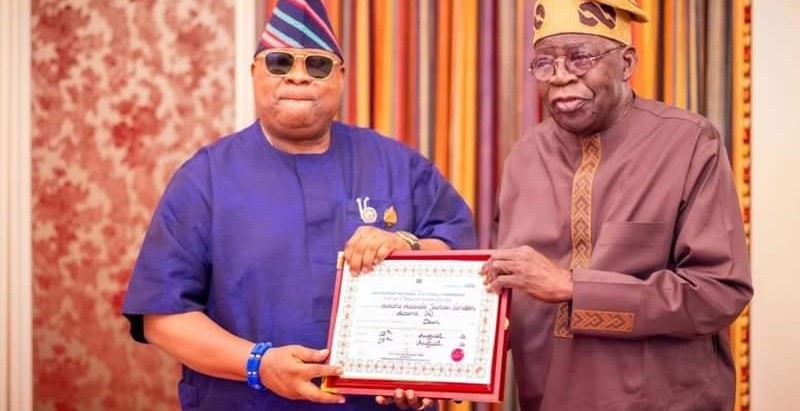
Utomi’s call for mass participation echoes comments he made earlier this week following Osun State’s August 15 governorship election, which he cited as proof that determined voters can overcome attempts at electoral manipulation. Reacting to Governor Ademola Adeleke’s re-election victory in that poll, Utomi said the result showed that the will of the electorate can prevail over efforts to rig outcomes, declaring on his verified X account: “Massive turn out and a fighting spirit can save democracy. On to 2027 in confidence.”
INEC had announced that Adeleke secured 511,067 votes across 19 Local Government Areas, defeating his closest challenger, the APC’s Bola Oyebamiji, who polled 444,815 votes in 11 Local Government Areas.
Utomi’s remarks come against the backdrop of repeated warnings he and allied civil society figures have issued in recent months about the credibility of the electoral process ahead of 2027. Speaking earlier this year alongside the Movement for a Credible Election (MCE) at the Centre for Values in Leadership in Victoria Island, Utomi cited a sharp fall in voter participation in recent elections, with turnout reportedly dropping below 10 percent of registered voters in some polls, warning that continued erosion of confidence in the ballot could push citizens toward alternative and potentially dangerous forms of political expression.
He has also directed pointed criticism at the Independent National Electoral Commission, accusing it in April of colluding with the ruling All Progressives Congress and sections of the judiciary to exclude opposition figures from the 2027 ballot. Utomi described INEC as “a gang of electoral bandits whose sole mandate is to make Bola Ahmed Tinubu the sole presidential contestant in 2027,” pointing to the commission’s withdrawal of recognition for the leadership of the African Democratic Congress, including David Mark and Rauf Aregbesola, as evidence of a broader plot against the opposition.
Utomi’s warnings mirror a growing body of survey data and commentary pointing to deep voter discontent ahead of 2027. A Voter Sentiment Tracker released by SBM Intelligence in June, based on a survey of 829 respondents across Nigeria’s six geopolitical zones, found that the election may hinge less on party messaging and more on whether voters who are angry, hungry and disillusioned actually turn out to vote, amid mounting frustration over inflation, insecurity, unemployment and electricity supply.
At the same time, some survey data suggests that discontent has not necessarily translated into voter apathy. A separate National Voter Intentions Survey by Yiaga Africa found that 77 percent of Nigerians intend to vote in 2027 despite ongoing security concerns.
Utomi, a former presidential candidate and prominent Tinubu critic, has positioned himself as one of the most vocal figures warning that democratic backsliding through weakened electoral laws, mass defections to the ruling party and a shrinking opposition could undermine the credibility of the 2027 vote. His comments add to a broader debate over whether Nigeria’s economic hardship, driven in part by the removal of the fuel subsidy and other reforms, will ultimately depress or galvanise voter turnout when the country goes to the polls.