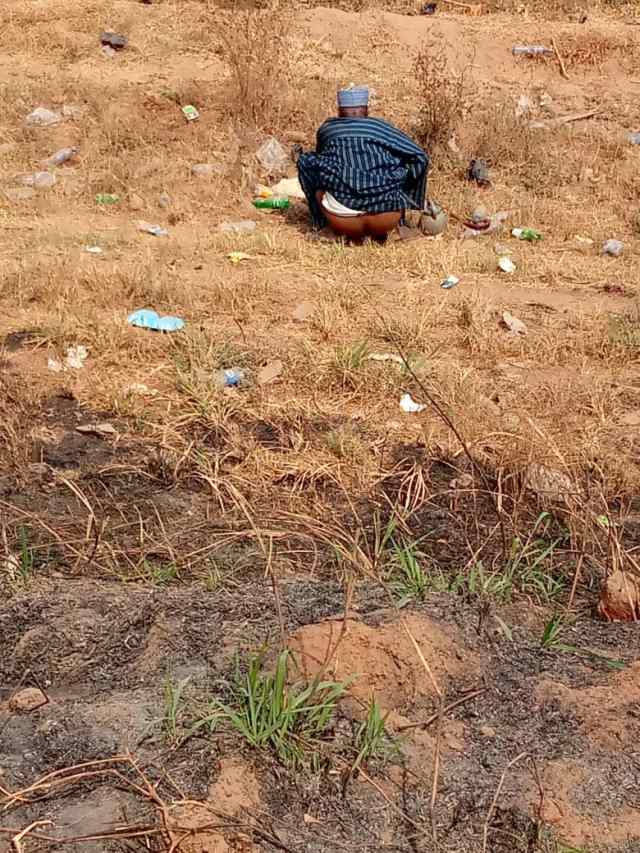
Despite years of government campaigns and interventions, open defecation remains one of Nigeria’s most pressing public health challenges, exposing millions of people to preventable diseases and undermining efforts to improve sanitation across the country.
Recent data from the United Nations Children’s Fund (UNICEF) indicate that about 48 million Nigerians still practise open defecation, while around one-third of the population lacks access to safe drinking water. The agency warns that inadequate sanitation and poor hygiene continue to fuel outbreaks of diarrhoea, cholera and other waterborne diseases, particularly among children.
Open defecation, the practice of relieving oneself in open spaces such as fields, bushes, waterways or roadsides remains widespread in many rural communities and urban informal settlements due to limited access to toilets, inadequate sanitation infrastructure, poverty and behavioural factors.
According to UNICEF, poor water, sanitation and hygiene (WASH) conditions account for 73 per cent of the burden of diarrhoeal and enteric diseases in Nigeria. The organisation notes that these illnesses disproportionately affect children, contributing to malnutrition, school absenteeism and preventable deaths.
The Federal Government launched the Clean Nigeria: Use the Toilet Campaign in 2019 with the goal of making the country open-defecation-free. Although the original 2025 target was not achieved, the government has revised its implementation strategy and continues to work with state governments, development partners and local communities to accelerate progress toward universal sanitation coverage.
Nigeria remains among the countries with the highest number of people practising open defecation globally. According to the WHO/UNICEF Joint Monitoring Programme, an estimated 18.4 per cent of Nigeria’s population still practised open defecation as of 2022, representing more than 40 million people.
Experts say the consequences extend beyond public health. Open defecation contaminates water sources, degrades the environment, increases healthcare costs and exposes women and girls to heightened risks of harassment and violence when they seek secluded places to relieve themselves.
The National Bureau of Statistics’ WASH National Outcome Routine Mapping (WASHNORM) survey also found that 24.4 per cent of household members in Nigeria practised open defecation, while access to improved sanitation remained uneven across the country’s geopolitical zones.
Public health specialists have called for increased investment in sanitation infrastructure, greater access to affordable household toilets, stronger enforcement of sanitation regulations and sustained public awareness campaigns to change behaviour.
Development partners, including UNICEF, have repeatedly emphasised that ending open defecation is essential to achieving the Sustainable Development Goal 6, which seeks universal access to safe water and sanitation by 2030. They argue that success will require coordinated action by governments, the private sector and communities to expand sanitation services and promote hygienic practices nationwide.