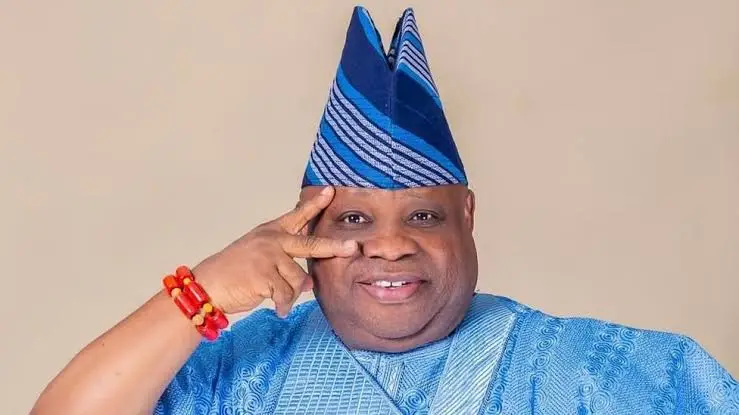
The political landscape in Osun State has shifted ahead of the governorship election following the decision by two candidates from smaller political platforms to withdraw from the race and endorse incumbent Governor Ademola Adeleke.
The development has triggered a fresh round of political realignment as the candidates and their supporters seek to consolidate behind the governor’s re-election bid.
The endorsements, announced in Osogbo, are expected to add to Adeleke’s coalition as the campaign enters its final phase.
The withdrawing candidates cited the governor’s performance in infrastructure development, workers’ welfare and social intervention programmes as reasons for backing his re-election.
They also directed their supporters and grassroots structures across the state’s 30 local government areas to support Adeleke at the polls.
The move effectively narrows the field of competing political interests and could strengthen the incumbent’s campaign machinery in areas where the endorsing candidates have established political networks.
Adeleke welcomed the development, describing the decision as evidence of political maturity and a shared commitment to the state’s development.
He also pledged to operate an inclusive administration and incorporate ideas from political groups supporting his re-election.
Political endorsements by candidates from smaller parties do not automatically translate into the transfer of all their supporters to another candidate.
However, such realignments can become significant in a closely fought election, particularly where the margins between leading candidates are narrow.
The strength of the latest endorsements will depend largely on whether the candidates can successfully transfer their grassroots structures, campaign workers and voter networks to Adeleke.
Their influence could be particularly important in local government areas where they have established support bases.
The consolidation could also strengthen the governor’s election-day organisation by bringing additional political organisers and polling-unit agents into his campaign structure.
For the incumbent, the endorsements provide both organisational and political benefits.
The arrival of candidates from other political platforms allows Adeleke’s campaign to project an image of expanding support and a broader coalition ahead of the election.
It could also reduce vote fragmentation among voters who might otherwise have supported smaller parties.
However, the extent of the electoral benefit will ultimately depend on whether supporters of the withdrawing candidates follow their leaders’ endorsements when voting begins.
The development could force opposition parties to reassess their strategies as the election approaches.
The All Progressives Congress and other opposition platforms will need to maintain their existing support bases while attempting to attract voters who may have previously been aligned with the smaller parties.
Opposition campaigns are also likely to place greater emphasis on voter mobilisation, particularly in areas considered electoral strongholds or potential swing areas.
Political analysts caution that public endorsements should not automatically be interpreted as guaranteed votes.
Past elections have shown that political supporters sometimes make independent decisions at the ballot box despite directives from party leaders and candidates.
The real test of the latest realignment will therefore come on election day, when voters determine whether the political coalition announced in Osogbo translates into actual electoral support.
With the campaign entering its crucial stage, the latest withdrawals add another layer to an increasingly competitive Osun governorship contest and could influence how the major parties approach their final mobilisation efforts.