
Voters in Osun State will on Saturday choose among 14 candidates vying for the chance to occupy the Bola Ige House in Abeere, in what will be the final off-cycle governorship election before Nigeria’s 2027 general elections, following the successful conduct of the Ekiti governorship poll on June 20.
While all 14 candidates are on the ballot, the contest has narrowed to three major contenders: incumbent Governor Ademola Adeleke of the Accord Party, the All Progressives Congress (APC) candidate Bola Oyebamiji, and the African Democratic Congress (ADC) candidate Najeem Salam, a former Speaker of the Osun State House of Assembly. The Independent National Electoral Commission (INEC) has disclosed that over 2.3 million people are registered to vote across 332 wards and 3,763 polling units.
Here are the major factors political observers say could shape the outcome.
1. Incumbency and Governing Record
Adeleke enters the race with the advantage of incumbency, having governed Osun since 2022. His campaign rests on his record in office, but he faces criticism over the early sacking of teachers and health workers, the dismissal of media workers, and allegations of nepotism in recruitment. His opponents have also questioned his performance in sectors including agriculture, health and commerce.
Oyebamiji, a former Commissioner for Finance in the state, has built his campaign around experience in public administration and economic management, centred on fiscal discipline, prompt salary payment, and closer collaboration with the federal government. He is seeking to return the APC to power in Osun after the party lost the governorship to Adeleke in 2022.
2. The Shadow of Oyetola
Although not on the ballot this time, former Governor Gboyega Oyetola now Minister of Marine and Blue Economy is widely regarded as a political father figure to Oyebamiji, his former Finance Commissioner. Oyetola’s one-term record as governor could therefore influence perceptions of his protégé’s candidacy, for better or worse.
3. Local Government Control
A significant undercurrent in the race is the unresolved dispute over control of Osun’s 30 local government areas, widely seen as the grassroots foundation of Nigerian politics. After Adeleke’s 2022 victory, outgoing Governor Oyetola’s APC swept local government elections before Adeleke took office; Adeleke subsequently dissolved those councils and conducted fresh elections that were won by his own party. That dispute has since become the subject of a prolonged legal battle, and many observers believe the APC currently retains effective control of council leadership across the state, a structural asset for Oyebamiji’s campaign.
4. The Battle of Osun West
Unusually, all three leading candidates hail from the same senatorial district, Osun West. Adeleke is from Ede, Oyebamiji from Ikire in Irewole Local Government Area, and Salam from Ejigbo. The district, comprising 10 local government areas with a substantial voter population, has historically been a battleground in Osun politics.
In the 2022 election, Adeleke won Osun West decisively, polling 144,558 votes (53.49%) against Oyetola’s 116,860 (43.24%), with particularly strong performances in his home councils of Ede North and Ede South, where he won by margins of roughly 14,000 and 13,700 votes respectively. Analysts say Oyebamiji could offset Adeleke’s advantage in Osun West only if the APC produces large margins in the state’s Central and Eastern senatorial districts while making meaningful inroads in competitive areas.
5. Federal Backing and National Political Weight
Osun is currently governed by a party outside the ruling coalition at the centre, and the APC which controls 31 of Nigeria’s 36 elected governorships is seen as eager to reclaim the state ahead of 2027, potentially deploying significant national resources behind Oyebamiji’s campaign. President Bola Tinubu is understood to have a strong political interest in recapturing Osun. Conversely, Adeleke could benefit from federal-opposition dynamics if his rivals split the anti-incumbent vote.
6. The ADC’s Role as a Potential Spoiler
Analysts have also pointed to the possibility that Salam’s ADC could fragment opposition votes away from the APC. Should this occur, Adeleke could secure re-election without needing an overwhelming majority, benefiting from a divided opposition rather than outright dominance.
7. Rotational Politics and Zoning Sentiment
Though Osun State has no formal or legal backing for rotational governorship among its three senatorial districts, informal political lobbying, party strategy and shifting alliances around zoning sentiment could still influence voter behaviour in various parts of the state.
8. Turnout, Security and Logistics
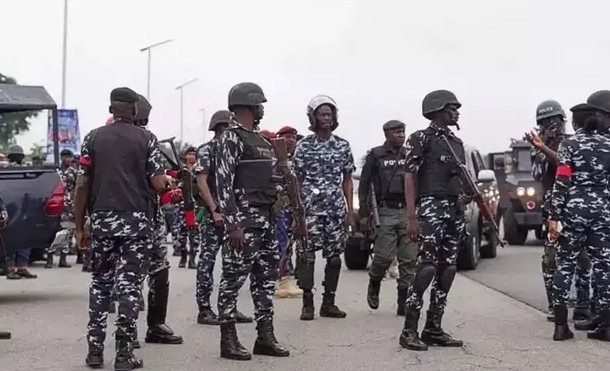
Beyond political positioning, the mechanics of the election itself could prove decisive. INEC has deployed 4,427 BVAS devices, while 25,310 security personnel comprising roughly 15,000 police officers, 10,210 NSCDC personnel and about 100 EFCC operatives along with more than 30,000 NYSC members serving as ad-hoc election staff, will be central to Saturday’s exercise. Voter turnout, the smoothness of accreditation, and the security environment across the state’s local government areas could each tip a race expected to be closely contested.
With the three leading candidates all drawing support from overlapping geographic and political bases, Saturday’s election is expected to be a tightly contested three-way race, with the outcome likely to hinge on a combination of incumbency performance, local government structures, sectional voting patterns in Osun West, and the degree to which opposition votes are split between Oyebamiji and Salam.