The Ekiti State Government has continued efforts to embed environmental and social safeguards into the implementation of the Ekiti Knowledge Zone (EKZ), a $94.8 million special economic zone project backed by the African Development Bank (AfDB), as construction of the project moves closer to reality.
The EKZ is expected to begin construction in the third quarter of 2026, following a resettlement action plan and a year-long environmental and social impact assessment for landowners on the 208-hectare site, with compensation payments made in June 2025 to clear the land for development. The zone is being developed on 208.799 hectares of land between Ado-Ekiti and Ijan-Ekiti
The African Development Bank has committed $80 million in loan financing for the project, which is designed to foster linkages between educators, researchers, innovators, entrepreneurs and industries within one location. The Ekiti State Government is contributing $14.8 million in counterpart funding to complement the Bank’s financing for the overall $94.8 million project. In April 2023, the Federal Government conferred “free zone” status on the project under the Nigeria Export Processing Zones Authority Act, unlocking incentives for private investors, including rent-free land, tax holidays and import/export duty waivers.
Spanning 40 hectares, the EKZ is expected to generate 26,000 jobs and inject $14 million annually into the economy once completed, with a 20-hectare green technology park, roads, electricity, water supply and wastewater treatment facilities among the planned infrastructure.
Because the project is funded in part by the AfDB, it is subject to strict environmental and social risk-management requirements. According to the project’s Environmental and Social Impact Assessment (ESIA), contractors working on the EKZ are required to prepare their own Contractor’s Environmental and Social Management Plan (CESMP), taking into account the mitigation measures set out in the main ESIA report and general environmental management conditions for civil works.
The ESIA also envisages ongoing capacity-building for contractors and workers once construction begins, with training on occupational health and safety, environmental protection and cultural sensitivity to be coordinated by the project team.
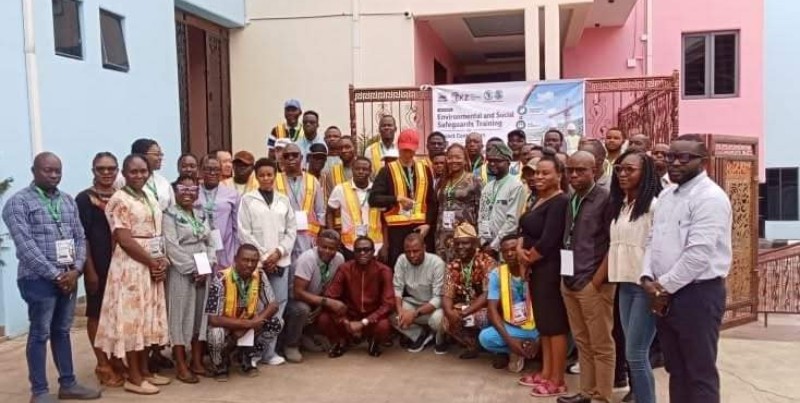
Ahead of construction, Ekiti State authorities have run a series of training and engagement sessions for stakeholders likely to be affected by or involved in the project:
In February 2026, the state government held a two-day community engagement programme for host communities affected by the proposed EKZ, aimed at promoting inclusive and sustainable development. The session, held at Ago Araromi along Ijan Road, briefed community leaders and professionals on potential social and environmental impacts, including land acquisition, labour influx, community security, and gender-based violence and child protection concerns. The Environmental Safeguard Specialist for the project, Aluko Ayodele, said the engagement was aimed at promoting community ownership and ensuring stakeholders understood the structures in place to address emerging issues.
Separately, following the payment of N1.4 billion in compensation to affected persons in June 2025 under the project’s Resettlement Action Plan, the state organised a two-day Livelihood Restoration Training for 97 identified vulnerable Project Affected Persons impacted by land acquisition for the EKZ. The RAP implementation consultant, Dr Oliver Nwuju, described the programme as a critical phase aimed at strengthening resilience and improving long-term income opportunities for the most vulnerable households in host communities, with beneficiaries including tenant farmers, hunters, and women engaged in oil palm processing and petty trading.
Project Coordinator Lolade Olutola, speaking through Environmental Safeguards Expert Ayodele Aluko, reiterated the commitment of the Governor Biodun Oyebanji administration to strict adherence to the Local Content Law.
The project, now spearheaded by the Ekiti State Development and Investments Promotion Agency, is expected to open its tender process within two months of August 2025, a process expected to take at least six months before construction begins. As that timeline advances, further rounds of contractor-focused environmental and safety training would be a logical next step to ensure compliance with the ESIA’s requirements though I could not independently confirm that a specific contractor training session under the headline you supplied has already taken place.