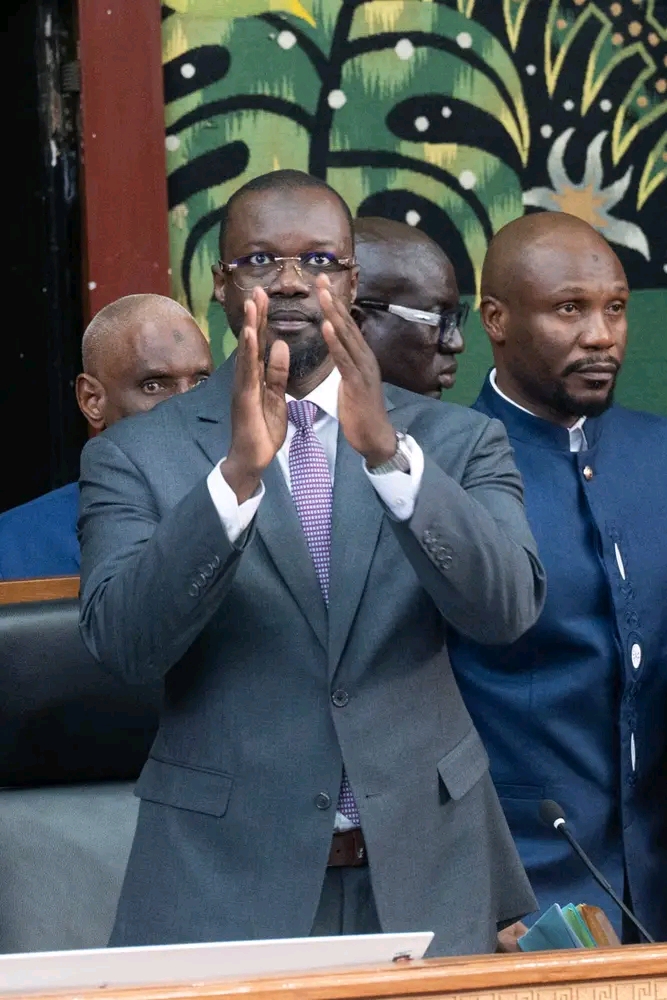
In a dramatic political comeback that has deepened Senegal’s escalating power struggle, Senegal’s parliament elected Ousmane Sonko as its speaker on Tuesday, just days after President Bassirou Diomaye Faye fired him as prime minister amid a deepening rift over the government’s reform agenda and how to resolve a worsening debt crisis.
Lawmakers first reinstated Sonko as a member of the National Assembly, then elected him as speaker. He secured the post by winning 132 of 133 votes cast at a sitting in Dakar, after the opposition boycotted the ballot.
Sonko moved quickly to strike a conciliatory tone in public, though analysts say his new position gives him substantial leverage over the president. “We are not here to fight against the president of the republic, but the assembly will fully play its role,” Sonko told lawmakers as he accepted the new post.
The two former allies, both senior figures in the ruling PASTEF party have been engaged in a fast-moving battle for control since they swept to power together in 2024, falling out over policy, authority and the direction of Senegal’s reform agenda.
Faye largely owes his position to Sonko, his one-time mentor, who would almost certainly have taken the presidency himself had he not been barred from the presidential election due to a defamation conviction. Faye appointed Sonko prime minister in April 2024 after winning that election.
Days before his removal, the former prime minister had openly criticised Faye in a parliamentary session. The president dismissed Sonko on Friday and dissolved the cabinet.
Sunday saw speaker and close Sonko ally El Malick Ndiaye resign, clearing the way for Sonko to become head of parliament, where PASTEF holds a strong majority.
As parliamentary speaker, Sonko will have significant scope to block Faye’s legislative agenda, according to Signal Risk analyst Greg Musiker.
His election as speaker now positions him as a political counterweight within Senegal’s ruling establishment ahead of the 2029 elections.
The development also rattled financial markets. International investors are likely to price in a higher risk of Senegal defaulting on its debt following Sonko’s removal as prime minister, investment bank Morgan Stanley warned on Tuesday, as the country’s bonds fell sharply. Senegal is labouring under a huge debt burden amounting to 132 percent of GDP.
Faye appointed Ahmadou Al Aminou Lo, a seasoned economist and former regional central bank official, to replace Sonko as prime minister late on Monday.
The proceedings were not without controversy. Opposition figures insisted that Sonko lost the right to sit in parliament once he joined the government. However, supporters of the former prime minister rejected this interpretation, arguing that the constitutional provision merely prevents the simultaneous exercise of executive and legislative duties. They stated that the Constitutional Council officially validated Sonko’s election and that it was never legally challenged within the stipulated deadline.
The opposition reacted angrily, with Aissata Tall Sall, who heads the main opposition coalition, denouncing what she called an “institutional coup.”