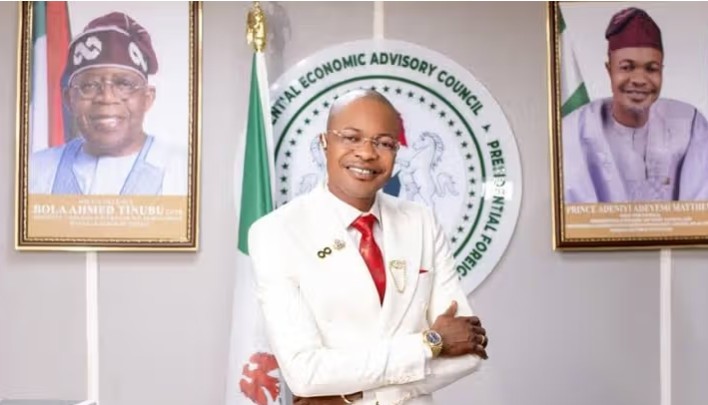

Nollywood actor and singer Gabriel Afolayan has shared his thoughts on the lingering family dispute involving former P-Square members Peter and Paul Okoye, following the conclusion of Peter’s tell-all video series on the issues surrounding the music duo’s breakup.
Afolayan’s comments come amid renewed public discussion about the strained relationship between the Okoye brothers, whose group, P-Square, was once one of Africa’s most successful music acts. The twins have pursued separate careers since their split, while disagreements involving their elder brother and former manager, Jude Okoye, have also remained a subject of public attention.
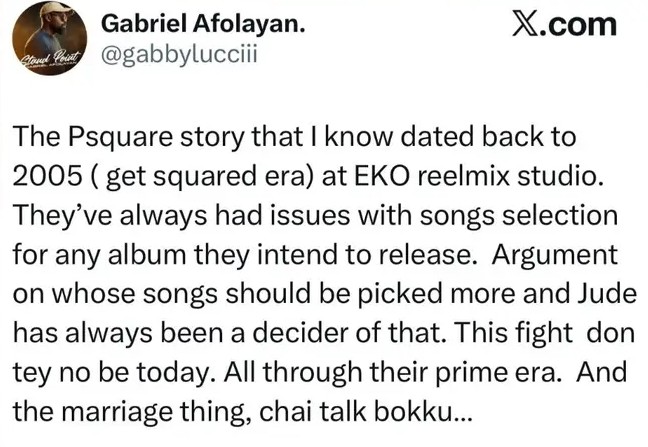
The actor reportedly reacted to Peter Okoye’s series, in which the singer offered his account of the events that contributed to the family’s prolonged dispute. Afolayan’s remarks have since attracted attention from fans and followers following the highly publicised revelations.
The latest development has once again placed the Okoye family’s private disagreements in the public spotlight, with fans debating the claims made in the series and calling for reconciliation between the brothers.
P-Square, comprising Peter and Paul Okoye, enjoyed major success with hit songs including Chop My Money, Bank Alert, Danger and Beautiful Onyinye before their relationship deteriorated and the duo separated professionally. Their elder brother, Jude, played a significant managerial role during their rise to prominence.

The brothers have continued their music careers independently, with Peter performing as Mr P and Paul as Rudeboy. Their disputes have periodically resurfaced publicly, particularly through social media exchanges and interviews.
Afolayan’s intervention adds another voice from Nigeria’s entertainment industry to the ongoing conversation, as public interest continues to surround the future of the Okoye brothers’ relationship.
While the actor’s comments have generated reactions online, the family dispute remains primarily a private matter involving the brothers, and the various allegations and accounts presented publicly should be treated as the perspectives of the individuals involved.