
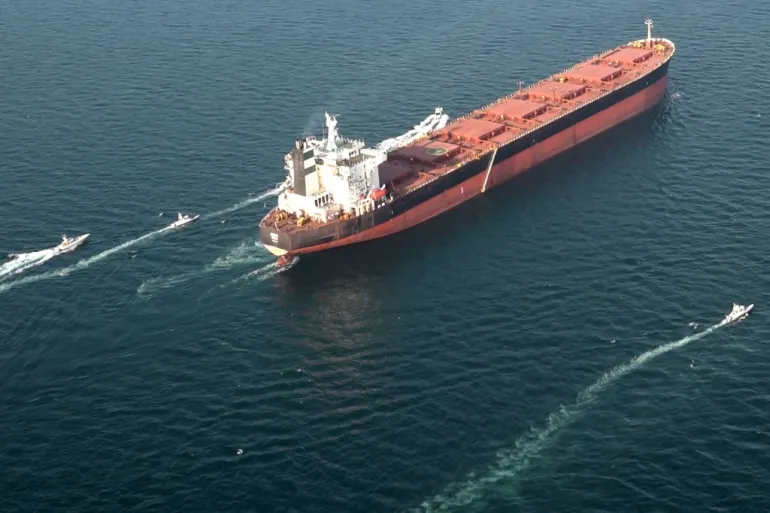
Iran’s military command has declared that it will target any vessel attempting to transit the Strait of Hormuz, significantly escalating tensions in the Gulf region amid faltering efforts to end the ongoing conflict.
The warning was issued on Thursday by Iran’s Khatam al-Anbiya Central Headquarters, which announced that the strategic waterway had been “completely closed” to all maritime traffic. The military command stated that any ship attempting to pass through the strait would be considered a legitimate target. According to Iranian state media, the announcement followed attacks on two vessels that allegedly attempted to navigate the waterway despite the restrictions.
Iran’s Revolutionary Guard Corps (IRGC) Navy said the two ships were struck after attempting what it described as an “illegal” passage through the strait. The military further warned vessels anchored in the Persian Gulf and the Sea of Oman against approaching the strategic corridor.
The latest development comes amid a renewed escalation between Iran and the United States. Washington launched a fresh wave of strikes on Iranian military infrastructure on Wednesday, with U.S. President Donald Trump pledging to intensify pressure on Tehran while accusing Iranian negotiators of delaying diplomatic efforts.
Iranian authorities said the closure of the Strait of Hormuz was a response to what they described as repeated violations of a ceasefire agreement and continued military attacks by the United States. Reports from Iranian media also indicated that explosions were heard in southern parts of the country near the strategic waterway, an area that has witnessed military activity in recent days.
The Strait of Hormuz is one of the world’s most critical maritime chokepoints, serving as a major route for global oil and gas exports. Roughly one-fifth of the world’s seaborne oil trade passes through the narrow waterway, making any disruption a significant concern for international energy markets and global shipping. Analysts warn that a prolonged closure could trigger sharp increases in energy prices and further destabilize global trade.
Despite Iran’s declaration, U.S. officials have maintained that some vessels continue to operate in the region, highlighting the uncertainty surrounding the extent and enforceability of the closure. The situation remains fluid as diplomatic efforts to prevent a broader regional conflict continue. .
The latest threat underscores the growing risks in the Gulf and raises concerns about the potential economic and geopolitical consequences of a prolonged disruption to one of the world’s most important shipping routes.