
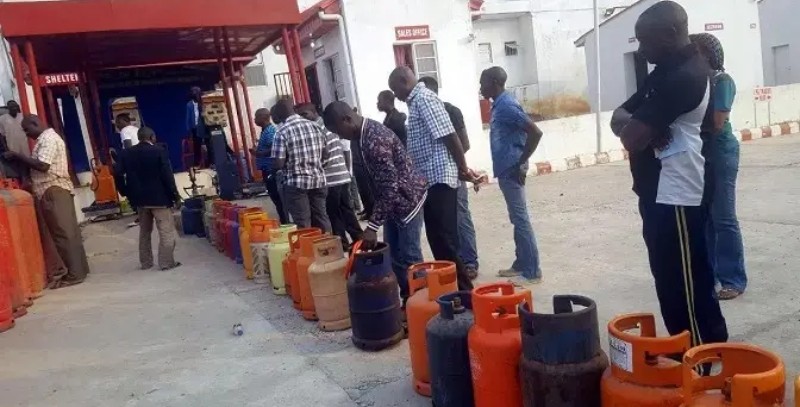
Residents of the Federal Capital Territory (FCT) are continuing to complain about the high cost of Liquefied Petroleum Gas (LPG), popularly known as cooking gas, despite a recent decline in retail prices.
A market survey in parts of Abuja showed that LPG currently sells for about ₦1,250 to ₦1,650 per kilogramme, depending on location and the point of purchase. The prices represent an improvement from the sharp increases recorded earlier in the year, when cooking gas sold for as much as ₦2,000 per kilogramme in some parts of the FCT.
At the prevailing rates, consumers requiring a 5kg cylinder could spend between ₦6,250 and ₦8,250, while refilling a 12.5kg cylinder could cost between ₦15,625 and ₦20,625.
Despite the reduction, many households say the commodity remains unaffordable, particularly amid the broader pressure on household incomes and the rising cost of food and other essential goods.
The recent decline follows improvements in LPG supply. In June, marketers reported that Abuja consumers were paying between ₦1,250 and ₦1,500 per kilogramme as supply conditions improved.
Earlier in the year, however, the situation was considerably worse. In June, reports indicated that LPG prices in the FCT had risen from about ₦1,200 per kilogramme to around ₦2,000, prompting some households and businesses to return to charcoal and firewood as cheaper alternatives. Industry operators attributed the surge to supply shortages, higher depot prices, foreign-exchange pressures and transportation costs.
The continued high cost has raised concerns about the affordability of clean cooking fuel for low- and middle-income households. The switch to firewood and charcoal also poses environmental and public-health concerns because of the smoke and pollutants produced by traditional cooking fuels.
Industry stakeholders have expressed optimism that increased domestic supply and measures to reduce distribution costs could further lower LPG prices. The Nigerian Association of Liquefied Petroleum Gas Marketers (NALPGAM), for instance, has projected that retail prices could fall to between ₦900 and ₦1,100 per kilogramme by the end of 2026 if measures to improve supply and reduce costs are effectively implemented.
For many FCT residents, however, the immediate concern remains the affordability of cooking gas, with consumers calling for measures that would make the cleaner cooking fuel more accessible to households.