Nigeria’s fragile bid to unite its opposition forces ahead of the 2027 general elections is unraveling after two major political heavyweights, Peter Obi and Rabiu Kwankwaso, formally withdrew from the African Democratic Congress (ADC)-led coalition just days after its high-profile “Ibadan Declaration.”
The exits, confirmed on Monday, May 4, 2026, have plunged the opposition project into uncertainty, raising fresh doubts about the feasibility of a single consensus candidate to challenge President Bola Tinubu in 2027.
The coalition, operating under the umbrella of the African Democratic Congress, had recently brought together leaders from more than ten opposition parties in Ibadan, where they pledged unity and an agreement to field a joint presidential candidate.
The sudden departure of Obi, former Labour Party presidential candidate, and Kwankwaso, leader of the Kwankwasiyya political movement, has significantly weakened what was already a fragile alliance.
Obi cited persistent internal conflicts, legal disputes, and mistrust within the coalition as reasons for his exit, according to a statement circulated by party insiders.
Kwankwaso’s departure followed shortly after, with reports indicating that both politicians are now aligning with a new political platform, the Nigeria Democratic Congress (NDC), reportedly backed by former Bayelsa State Governor Seriake Dickson.
An ADC spokesperson, Bolaji Abdullahi, admitted that the coalition’s unity roadmap had been severely disrupted.
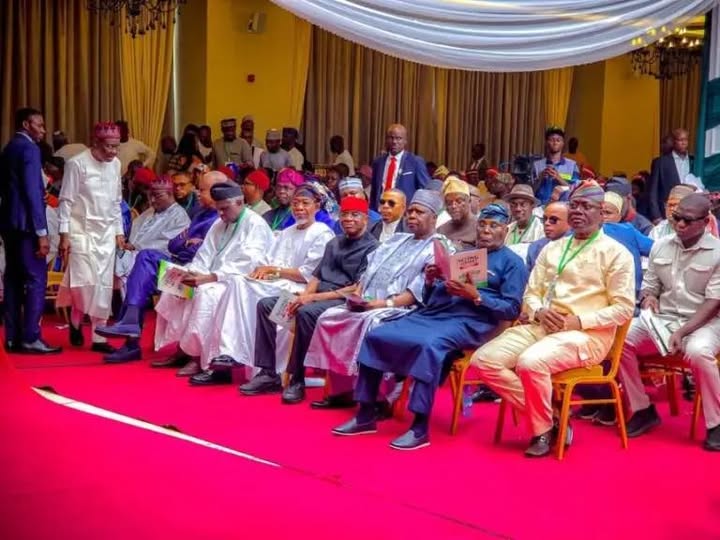
“The Ibadan Declaration will have to be reviewed,” he said. “Under the present circumstances, the plan for a single candidate is now on life support.”
Political observers say the developments point to the emergence of a new informal alliance between Obi and Kwankwaso, already being described in political circles as the “OK Movement.”
Under this arrangement, both men are expected to consolidate their support bases—Obi in the South-East and Kwankwaso in the North-West—potentially fielding a joint presidential ticket under the NDC platform.
The breakdown of the coalition is widely seen as a setback for opposition forces seeking to unseat the ruling All Progressives Congress (APC) in 2027.
Analysts note that a divided opposition could repeat the dynamics of previous elections, where fragmented votes ultimately benefited the incumbent.
Cheta Nwanze of SBM Intelligence said the situation reinforces long-standing concerns about opposition coordination in Nigeria’s electoral politics, warning that “a fractured opposition will inevitably cannibalize its own vote base.”
The presidency has responded sharply to the developments, with presidential spokesperson Bayo Onanuga describing Obi as a “political nomad” and accusing him of pursuing opportunistic alliances amid opposition instability.
With the election cycle approaching, Nigeria’s opposition now appears split between competing blocs: one aligned with the ADC structure and another emerging around the Obi-Kwankwaso axis.
While the Ibadan Declaration was initially hailed as a breakthrough toward unity, its rapid unravelling has once again highlighted the deep ideological and personal divisions within Nigeria’s opposition landscape—potentially leaving the ruling APC with a clearer path into the 2027 contest.