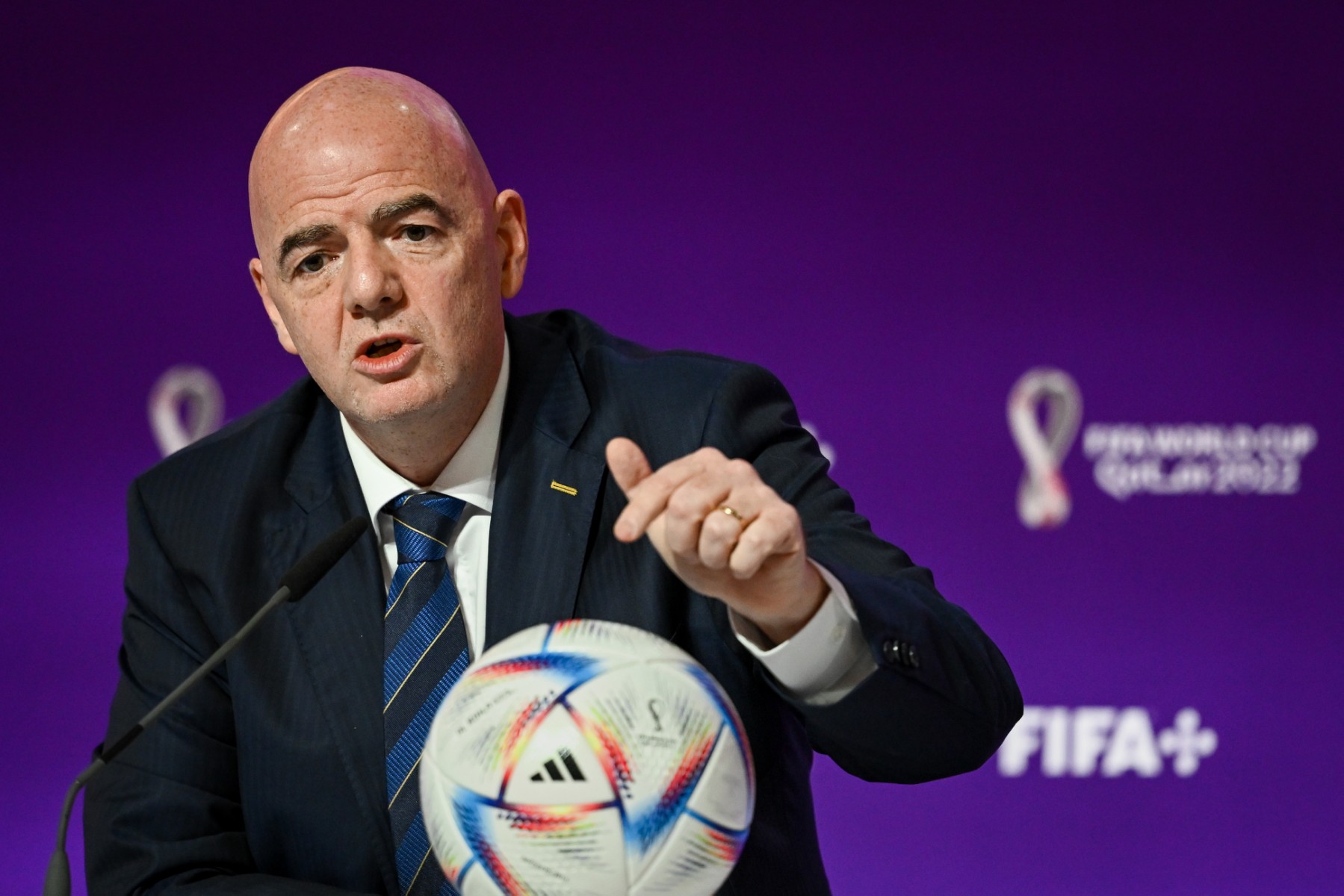
FIFA President Gianni Infantino has defended the rising cost of tickets for the 2026 FIFA World Cup, dismissing criticism over multi-million-dollar resale listings and insisting that the tournament’s pricing reflects the realities of the American entertainment market.
Speaking at the Milken Institute Global Conference in Beverly Hills on Tuesday, Infantino reacted to widespread outrage after four tickets for the 2026 World Cup final at MetLife Stadium appeared on FIFA’s official resale platform for nearly $2.3 million each.
The FIFA boss joked that he would personally deliver refreshments to anyone willing to spend such an amount on a ticket.
“If somebody buys a ticket for the final for $2 million, I will personally bring him a hot dog and a Coke to make sure he has a great experience,” Infantino said during the event.
The comments have intensified global debate over affordability and access ahead of the expanded 48-team tournament, which will be jointly hosted by the United States, Canada and Mexico.
Infantino argued that the resale figures do not represent FIFA’s official face-value pricing, but rather reflect open-market demand within the United States, where ticket resales are largely unrestricted by law.
According to him, FIFA’s official resale platform merely provides a regulated marketplace for buyers and sellers, while the governing body earns commission fees from completed transactions.
The controversy comes amid a dramatic increase in premium ticket prices compared to previous World Cups. Top-tier seats for the 2022 final in Qatar reportedly sold for around $1,600, while equivalent premium tickets for the 2026 final have been listed at nearly $11,000 before resale markups.
Critics, including fan groups and football supporters’ organizations, have accused FIFA of turning the World Cup into an elite luxury event beyond the reach of ordinary supporters.
The supporters’ network Football Supporters Europe has reportedly filed complaints with European authorities over what it described as excessive and exclusionary pricing practices.
Despite the backlash, FIFA says demand for the tournament remains unprecedented. Infantino disclosed that more than 500 million ticket requests have already been recorded for the 2026 World Cup, far exceeding demand levels seen during the 2018 and 2022 editions.
The tournament will also mark the first time FIFA officially adopts a large-scale dynamic pricing and resale model similar to systems used in major American sports and entertainment events.
Analysts say the pricing strategy could generate billions in additional revenue for FIFA but may also deepen concerns about commercialization and the widening gap between football’s governing bodies and grassroots supporters.
Infantino, however, maintained that a substantial portion of group-stage tickets would remain accessible, noting that many lower-category seats are expected to cost under $300.
As preparations continue for the June 11, 2026 kickoff, the debate over ticket affordability is rapidly emerging as one of the defining controversies surrounding the biggest World Cup in football history.