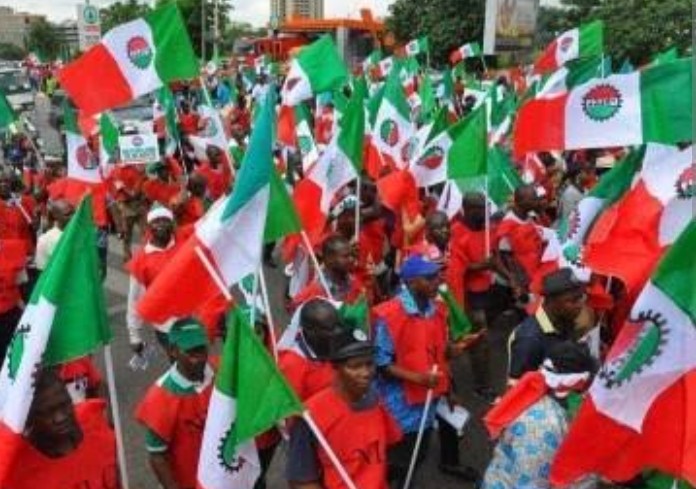
The Nigeria Labour Congress (NLC) has rejected a proposed N100,000 national minimum wage reportedly being considered by state governors, arguing that the amount is inadequate given Nigeria’s rising cost of living and worsening economic conditions.
The proposal was disclosed by the Chairman of the Nigeria Governors’ Forum (NGF) and Governor of Kwara State, AbdulRahman AbdulRazaq, who said discussions were ongoing on a possible wage review to help workers cope with inflation and increasing living expenses. According to him, state governments, the Federal Government and organised labour are engaging to determine a wage structure that balances workers’ welfare with fiscal sustainability.
Reacting to the proposal, NLC spokesperson Benson Upah described the N100,000 figure as unrealistic and far below what Nigerian workers require to meet basic needs under current economic conditions. He argued that a significantly higher wage would be necessary to offset the effects of inflation, currency depreciation and rising utility costs.
“Given the realities around the exchange rate, inflation, raised tariffs, the surge in the pump price of petrol and associated costs, the decline in the purchasing power of the average worker, and the effects of the new tax regime on our cost of living, the realistic figure would be N1 million,” Upah said in an interview cited by several local media outlets.
The labour leader pointed to the continued depreciation of the naira, rising electricity tariffs, higher fuel prices and increasing food costs as factors that have significantly reduced the value of workers’ earnings. He also argued that improved government revenues, including allocations from the Federation Account Allocation Committee (FAAC), should enable authorities to provide better remuneration for workers.
The debate over wages has intensified since the removal of fuel subsidies and the liberalisation of the foreign exchange market, policies that have contributed to sharp increases in transportation, energy and food prices across the country. Labour unions have repeatedly argued that the current national minimum wage of N70,000, approved in 2024, has already been eroded by inflation.
While governors have yet to formally present a new minimum wage framework, the latest exchange highlights the growing tension between labour unions and government officials over how best to address the economic pressures facing Nigerian workers.