
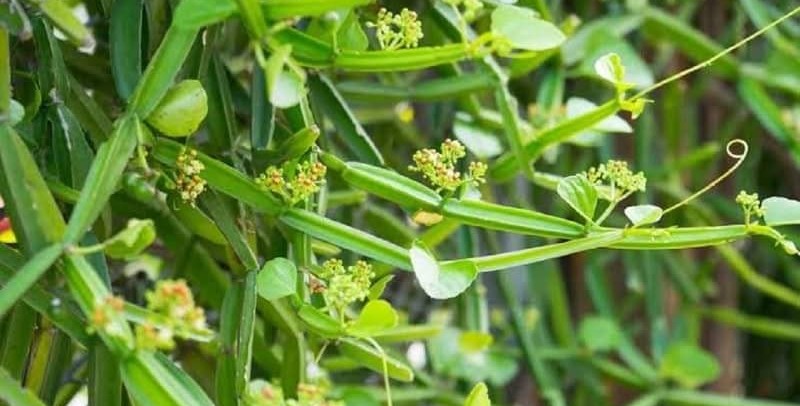
A new peer-reviewed study conducted by researchers at the University of Zimbabwe has confirmed that Cissus quadrangularis a medicinal plant widely used in traditional medicine across Zimbabwe and other parts of Africa is both effective against intestinal worm infections and safe for consumption, lending scientific backing to a remedy long used by traditional healers.
Cissus quadrangularis, a member of the Vitaceae family, is a widespread perennial climber found across tropical and subtropical regions of Africa. In Zimbabwe, the square-stemmed plant is most commonly found in open woodlots, frequently climbing on mopane trees. The plant has long been used in traditional medicine for a range of conditions, but is most closely associated with treating intestinal worms, a use reflected in its local Shona name, “muvengahonye,” which translates roughly to “one that hates worms.”
The study, titled “Cissus quadrangularis: Anthelminthic Activity and Biological Consumption Substantiation,” was published on August 2, 2025, in the Journal of Complementary and Alternative Medical Research and led by Joey Chifamba of the University of Zimbabwe’s Department of Pharmacy and Pharmaceutical Sciences, alongside co-authors Sifiso R. Sai, Wadzanai S. Mutambanengwe and Fortune Chagonda.
Researchers set out to confirm the plant’s metabolomic profile of pharmacological relevance, its acute oral toxicity, and its anthelmintic (anti-worm) and antibacterial activity. Phytochemical analysis was carried out using classical wet chemical tests, while acute oral toxicity was evaluated according to OECD Guideline 425 using Sprague Dawley rat models. Antibacterial activity was tested using the macrodilution broth method under CLSI guidelines, with doxycycline as the control, while anthelmintic activity was assessed against Pheretima posthuma earthworms, benchmarked against 20mg of albendazole, a standard deworming drug.
The metabolomic analysis revealed the presence of significant pharmacologically active secondary metabolites, including polyphenols, flavonoids and alkaloids. The lyophilised (freeze-dried) plant extract demonstrated antibacterial activity comparable to doxycycline against both gram-positive Staphylococcus aureus and gram-negative Escherichia coli.
On safety, the acute oral toxicity study confirmed that Cissus quadrangularis is non-toxic, with a median lethal dose (LD50) above 2,000 mg/kg a threshold generally considered indicative of low toxicity risk in pharmacological research.
On efficacy, the anthelmintic testing found that the plant extract was effective in causing both paralysis and death in the test earthworms, within time frames comparable to those achieved by albendazole, the pharmaceutical standard used for comparison.
The researchers concluded that their findings validate the traditional use of the plant in African medicine as an effective and biologically safe anthelmintic treatment. The study adds a layer of modern scientific scrutiny to a remedy that has been passed down through generations of traditional healers, offering evidence-based support for a treatment already embedded in Zimbabwean and broader African ethnomedicine.
The Zimbabwean findings align with a broader, though still limited, body of international research into Cissus quadrangularis’s anthelmintic properties. Separate laboratory studies have similarly found the plant’s extracts effective against parasitic worms one study recorded wormicidal activity as high as 95 to 100 percent against the parasite Haemonchus contortus at higher extract concentrations, while other reviews have noted the presence of tannins and related phytochemicals believed to drive the plant’s anti-worm activity.
More broadly, Cissus quadrangularis has attracted growing scientific interest in recent years for a range of other potential health applications, including bone healing, weight management and blood sugar regulation, with multiple systematic reviews and clinical trials generally supporting its safety profile when used appropriately, though researchers across these studies have consistently called for more extensive human clinical trials to confirm findings drawn primarily from laboratory and animal models.
While the new Zimbabwean study strengthens the scientific case for the plant’s traditional use, it like most existing Cissus quadrangularis research relied on laboratory and animal-based testing rather than large-scale human clinical trials specifically targeting intestinal worm infections. Health authorities and previous reviews of the plant have generally cautioned that, notwithstanding a favourable safety profile in short-term use, individuals should consult healthcare professionals before using traditional remedies to treat parasitic infections, particularly given limited data on long-term safety, potential drug interactions, and use during pregnancy or breastfeeding.