
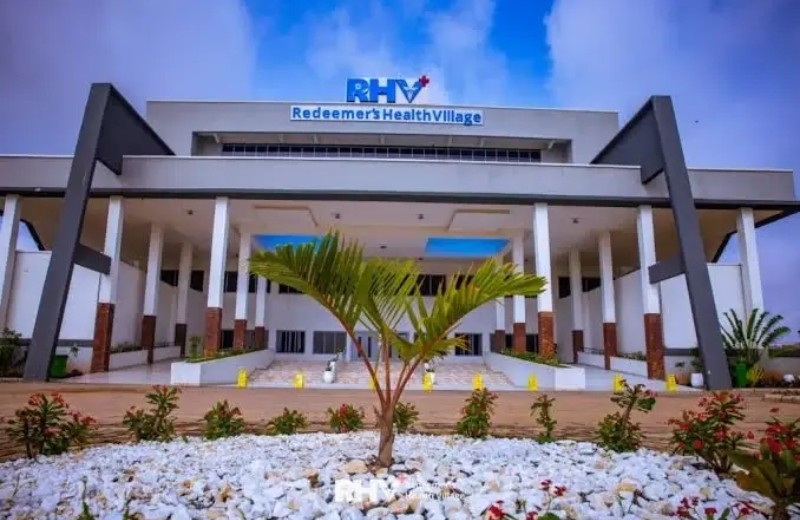
Redeemer’s Health Village (RHV), a 300-bed multispecialty hospital established by the Redeemed Christian Church of God (RCCG), has launched a robotic surgery programme aimed at expanding access to advanced surgical care in Nigeria and reducing the need for Nigerians to seek complex procedures abroad.
The programme was unveiled in Lagos on Saturday in partnership with RoboMed Global Inc., a United States-based medical technology and capacity-building company.
The initiative combines robotic-assisted surgical services with a training academy designed to develop Nigerian surgeons and other healthcare professionals capable of performing and supporting advanced procedures locally.
Speaking at the launch, the Minister of State for Health and Social Welfare, Dr Iziaq Salako, said the initiative aligned with the Federal Government’s efforts to reverse Nigeria’s longstanding outbound medical tourism trend.
Salako said the availability of advanced surgical technology in Nigeria would help conserve foreign exchange while improving access to specialised healthcare.
He also said the programme would provide structured training and certification for surgeons interested in robotic surgery, with the aim of ensuring that the technology is used safely and effectively.
The Chief Executive Officer of Redeemer’s Health Village, Dr Adedamola Dada, said the project was designed to go beyond acquiring sophisticated equipment by building a sustainable pool of local expertise.
According to Dada, the RHV Robotic Academy is scheduled to begin training on October 22. The programme will follow a five-stage pathway comprising didactic lectures, dry laboratory training, wet laboratory training involving cadaver and animal models, human training, examination and credentialing.
Dada said the initial robotic surgery services would cover six specialties: urology, general surgery, gynaecological surgery, colorectal surgery, thoracic surgery and hepatobiliary surgery.
He added that RHV had acquired two robotic systems, with one intended for clinical services and the other dedicated to training.
The partnership represents an investment of about $4 million in robotic surgical services and training, according to officials involved in the initiative.
Stakeholders at the launch said robotic-assisted surgery could offer benefits including greater surgical precision, reduced blood loss and shorter recovery periods for some procedures. They, however, stressed that the technology would require skilled personnel, continuous training, reliable infrastructure and sustained institutional support to deliver its full benefits.
RoboMed officials also disclosed that the company had begun robotic surgery in Nigeria in November 2025 at NISA Premier Hospital in Abuja and had completed 26 robotic surgical cases in the country, covering areas including urology, gynaecology, living kidney donation and complex abdominal surgery.
The launch comes amid persistent concerns over Nigerians travelling abroad for specialised medical treatment, a trend that contributes to the country’s foreign exchange outflows.
The Federal Government has identified private-sector investment, advanced technology, specialist training and stronger healthcare infrastructure as important components of efforts to strengthen domestic healthcare capacity.
With the introduction of robotic surgery at RHV, stakeholders hope the programme will help expand access to high-end surgical services while creating a new generation of Nigerian specialists capable of delivering complex procedures locally.