
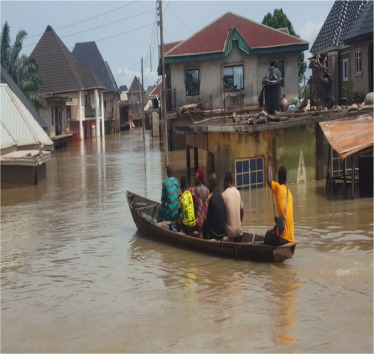
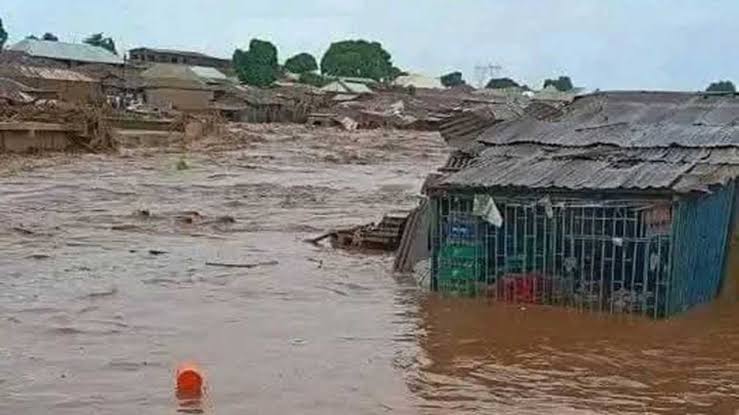
When floods sweep through Nigerian communities, the immediate attention often focuses on the visible destruction, collapsed homes, damaged farmlands, displaced families and communities submerged by rising waters. However, long after the floodwaters recede and emergency relief efforts slow down, many survivors continue to battle a less visible crisis: severe psychological distress.
Recent mental health assessments and studies have revealed that repeated flooding across Nigeria is contributing to a growing mental health burden, with thousands of displaced residents experiencing trauma, anxiety, depression and what experts describe as “ecological grief”, the emotional pain associated with losing homes, livelihoods and communities due to environmental disasters.
For millions of Nigerians living in flood-prone areas, including coastal cities such as Lagos and riverine states like Bayelsa and Kogi, rainfall has become a source of fear rather than relief. Many residents now associate heavy clouds and storms with the possibility of losing their homes, belongings and means of survival.
Mental health professionals say repeated exposure to flooding can lead to prolonged stress conditions, leaving survivors in a constant state of anxiety and uncertainty. The continuous fear of another disaster can affect sleep patterns, emotional stability and overall quality of life.
Joseph Moko, a 26-year-old Lagos resident who has experienced recurring seasonal flooding, described the psychological pressure of living in a flood-prone area.
“Whenever it rains at night, I find it hard to sleep because I could wake up any moment and find my bed submerged. It’s mentally exhausting,” he said.
Experts say the trauma goes beyond immediate fear and anxiety. Many survivors experience what is known as ecological grief — a deep emotional response caused by the loss of familiar environments, homes and community structures.
For families forced into temporary shelters or internally displaced persons (IDP) camps, the impact is not only physical but emotional. Losing a home often means losing a sense of security, identity and connection to a place where memories, relationships and livelihoods were built over many years.
Research into the psychological effects of flooding has highlighted the severity of the crisis. Studies among displaced flood victims have found high levels of depression, anxiety and post-traumatic stress disorder (PTSD), with children emerging as one of the most vulnerable groups.
Findings from affected communities indicate that about 63.3 per cent of flood survivors experience moderate to severe depressive symptoms, while 53.4 per cent show elevated levels of anxiety. Nearly half of those affected show signs associated with PTSD, while children exposed to prolonged flooding have recorded significant emotional distress.
The impact on children has raised particular concerns among health experts. Flooding often forces schools to close, disrupts education, separates families and removes children from stable environments. Without access to counselling, education and safe spaces, many children struggle with emotional recovery, which could affect their long-term development.
The mental health crisis is worsened by Nigeria’s limited psychological healthcare capacity. The country has fewer than 300 registered psychiatrists serving a population of more than 200 million people, with most specialists concentrated in major urban centres.
During emergencies, disaster responses typically focus on immediate survival needs such as food, shelter, clean water and medical supplies. While these interventions are essential, experts warn that psychological support is often neglected.
As a result, many flood survivors are left to process trauma without professional assistance, relying on family members, religious organisations or community support groups that may not have the expertise to manage serious mental health conditions.
Public health specialists and climate advocates are now calling for a major shift in Nigeria’s disaster response strategy. They argue that mental health support must become a central part of emergency planning rather than an afterthought.
Experts recommend the deployment of mobile counselling teams to flood-affected communities, training frontline emergency workers to identify trauma symptoms, and establishing community-based mental health support programmes.
They also stress the need for stronger investment in mental healthcare infrastructure to prepare for the increasing impact of climate-related disasters.
As flooding becomes more frequent across Nigeria, experts warn that rebuilding communities cannot focus only on repairing roads, homes and infrastructure. They say recovery must also address the emotional wounds left behind, ensuring that survivors are supported not only in rebuilding their communities but also in recovering their mental wellbeing.