For many Nigerians, elections are presented as an opportunity to choose leaders and influence the direction of government. But for citizens struggling with rising food prices, transport costs, school fees and shrinking incomes, the decision at the ballot box can sometimes become entangled with the immediate struggle for survival.
As economic hardship persists, civil society organisations and political analysts have raised concerns that poverty and financial insecurity are creating conditions in which voters become more vulnerable to vote-buying and other forms of electoral inducement.
Research by Chatham House has found that vote-selling in Nigeria is strongly influenced by practical circumstances, including economic hardship, poverty, insecurity and dissatisfaction with governance. The organisation’s 2018 household survey found that more than 78 per cent of respondents considered exchanging votes for money or gifts unacceptable, highlighting the gap between public attitudes toward vote-buying and the realities confronting voters.
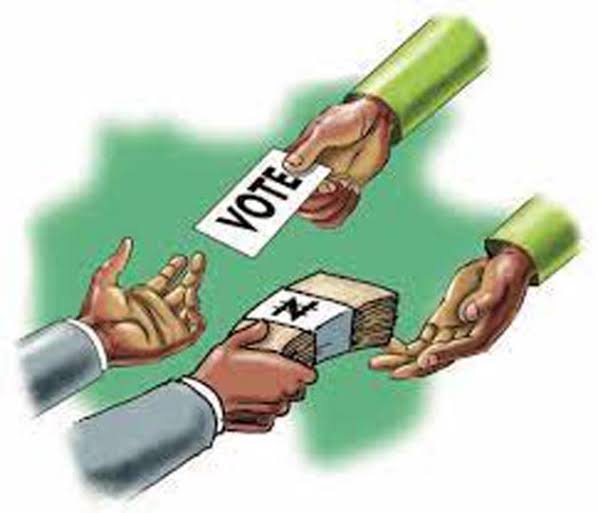
Vote-buying has become a recurring feature of Nigeria’s electoral landscape, with party agents and political intermediaries offering voters cash, food items and other forms of assistance in exchange for political support.
Reports from previous elections have documented voters being offered money or gifts and, in some cases, being asked to provide evidence that they voted for a particular candidate. Election observers have described practices such as photographing marked ballot papers or showing other evidence before receiving payment.
The amounts involved can vary considerably depending on the election, location and political competition.
The problem is particularly significant in communities where households have little financial cushion. For someone struggling to buy food or pay urgent bills, a cash payment on election day can appear more tangible than a political promise whose benefits may take years to materialise.
This does not necessarily mean voters are unaware of the consequences. Rather, economic vulnerability can make immediate financial relief difficult to reject.
The relationship between poverty and vote-selling has been documented by researchers studying Nigeria’s electoral system.
Chatham House researchers found that voters’ decisions to sell their votes are often driven by immediate material circumstances rather than simply by a lack of awareness of democratic principles. Their research identified economic hardship, insecurity and dissatisfaction with governance as important factors influencing the behaviour.
A separate study on Nigeria’s 2019 elections also identified poverty and socio-economic vulnerability as important factors behind vote-buying, arguing that reducing poverty should form part of efforts to address the problem.
More recent election-monitoring evidence has reinforced the concern. A report on the 2023 sub-national elections documented cases in which voters were offered cash, food, clothing and other goods in exchange for their votes, with observers linking the practice partly to prevailing economic hardship.
The consequences extend beyond election day.
When political competition becomes heavily dependent on financial inducements, candidates can have less incentive to compete primarily on policies, programmes and records of public service.
There is also a broader concern about the cost of political campaigns.
EFCC Chairman Ola Olukoyede said in June 2026 that some governorship aspirants had spent between ₦20 billion and ₦30 billion to secure their parties’ nominations and warned that enormous political expenditure could encourage elected officials to attempt to recover their investments after taking office.
This creates a potentially damaging cycle: politicians spend enormous sums to secure power, voters accept immediate financial inducements because of economic hardship, and citizens may subsequently struggle to hold elected officials accountable for long-term governance failures.
Efforts to combat vote-buying have traditionally focused heavily on voter education and enforcement.
The Independent National Electoral Commission (INEC) identifies vote-buying as an electoral offence and provides channels for reporting election-related violations.
However, recent election-monitoring reports suggest that awareness campaigns alone may not be sufficient.
A report examining the 2024 Ondo and Edo governorship elections found that repeated anti-vote-buying messages did not significantly reduce reported incidents. The report pointed to economic hardship, distrust in government, weak enforcement and the perceived effectiveness of vote-buying as factors sustaining the practice.
This suggests that the problem cannot be addressed solely at the polling unit.
Experts and civil society groups increasingly argue that combating vote-buying requires addressing the economic conditions that make voters vulnerable in the first place.
Strengthening social protection programmes could provide vulnerable households with alternatives to election-day inducements. Expanding access to jobs, affordable credit, healthcare, education and support for small businesses could also reduce dependence on political patronage.
At the same time, stronger enforcement against politicians and party agents involved in vote-buying remains necessary.
Chatham House has argued that political-finance reforms, protection of ballot secrecy, election security and stronger consequences for political actors who buy votes should accompany efforts to change voter behaviour.
The persistence of vote-buying raises a fundamental question about the quality of democratic choice in an economy where many households remain financially vulnerable.
A voter who accepts money on election day may gain temporary relief, but the wider political system could lose an opportunity for citizens to demand better healthcare, education, infrastructure, security and economic opportunities.
For political parties, the challenge is to convince voters that their programmes offer something more valuable than a one-time payment.
For government and electoral institutions, the challenge is even broader: creating economic conditions in which citizens are financially secure enough to make political decisions based primarily on their interests and expectations for the future.
Until that happens, poverty will remain not just an economic problem but a powerful factor in Nigeria’s electoral politics.