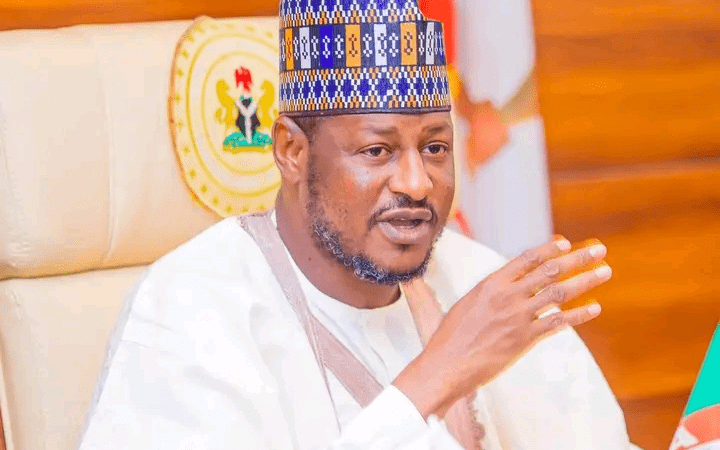

Chairman of the Presidential Committee on Fiscal Policy and Tax Reforms, Taiwo Oyedele, says the Federal Government’s economic reforms have pushed monthly Federation Account Allocation Committee (FAAC) disbursements to over N2 trillion, up from an average of N300 billion under past administrations.
Oyedele disclosed the fiscal shift on Monday in Owerri, while declaring open the 2026 National Council on Finance and Economic Development retreat. He expressed delight at the development, saying it would help boost national economic growth.
The three-day retreat carries the theme “Strengthening Fiscal Federalism for Equity, Sustainable Development and Economic Resilience in a Volatile Global Economy.”
Oyedele attributed the surge in revenue to President Bola Tinubu’s economic decisions, including the removal of the fuel subsidy and the unification of Nigeria’s foreign exchange rates, which he said culminated in a record N2.8 trillion disbursement in June 2026.
Despite the windfall, Oyedele cautioned states against complacency. “Ultimately, the federation cannot share its way into prosperity,” he said, advising states to transform into active economic platforms capable of attracting investment, supporting business, and driving job creation.
The minister also called for an urgent review of the country’s revenue allocation formulas to ensure equity across all 774 Local Government Areas, alongside a renewed push for fiscal responsibility and debt sustainability frameworks.
He noted that the Federal Government had expanded targeted interventions to cushion the effects of the reforms on vulnerable Nigerians, including a cash transfer programme reaching 15 million households and the NG-CARES social investment scheme.
Oyedele’s figures align closely with claims made by other government officials in recent months. Imo State Governor Hope Uzodimma, in his capacity as Chairman of the Progressive Governors’ Forum, told members of the diplomatic community in May that Tinubu’s reforms had lifted monthly FAAC disbursements to between N1.8 trillion and N2.6 trillion, alongside a rise in foreign reserves to $49.4 billion.
Individual states have also reported sharp increases in their own allocations. Uzodimma separately said Imo State’s monthly FAAC allocation rose from about N100 million after salaries in 2020 to more than N10.7 billion following the subsidy removal, while the state’s internally generated revenue grew from under N400 million to nearly N6 billion monthly. Similarly, Nasarawa State Governor Abdullahi Sule said his state’s monthly allocations climbed from N4.5 billion to N16 billion, which he said had created more fiscal space to execute development projects.
ÑAPC chieftain Dr. George Agbakahi has separately defended the reforms as having strengthened Nigeria’s macroeconomic fundamentals, while urging Nigerians to hold state governors accountable for how the increased allocations are spent, and noting that many citizens are yet to feel the reforms’ full impact.
The subsidy removal and FX unification, both enacted shortly after Tinubu took office in May 2023, significantly boosted government revenue by eliminating a costly fuel subsidy program and ending Nigeria’s multiple exchange rate system. The reforms have, however, also been linked to a sharp rise in inflation and cost-of-living pressures for many Nigerian households, a trade-off officials have frequently acknowledged even as they tout the fiscal gains. Independent verification of the precise disbursement figures cited by Oyedele and various governors was not immediately available from the Federation Account Allocation Committee’s official records.