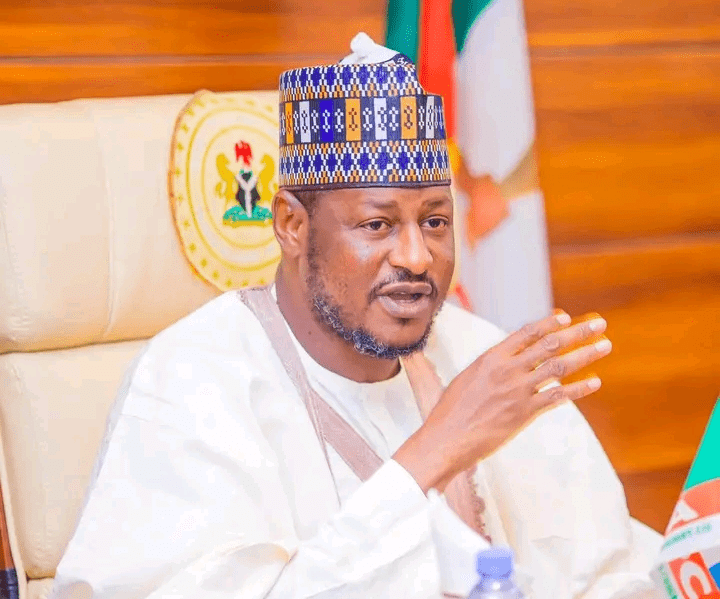
Katsina State Governor Dikko Umaru Radda has credited economic reforms introduced by President Bola Ahmed Tinubu with helping state governments deliver development projects and meet salary and pension obligations without resorting to loans.
Radda made the remarks on Sunday at the Tinubu/Dikko Assured (TDA) 2027 Islamiyya Teachers’ Empowerment programme, where he also commissioned 45 solar-powered streetlights across the state. The event was held at the Continental Events and Sports Complex in Katsina.
The governor said his administration has executed projects worth more than ₦30 billion without borrowing, while also paying salaries and pensions promptly, a departure from the past, when the state relied on loans to meet payroll obligations.
“Today, there is no sector where we are taking a loan to execute a single project in Katsina State. We are paying pensions and meeting our obligations to the people of Katsina,” the governor said, adding that the situation was different in the past, when the state depended on borrowing to pay workers’ salaries.
Radda framed the improvements as evidence of responsible governance rather than political messaging. He said leadership must be judged by performance and measurable results, not by political rhetoric or negative narratives, stressing that once leaders make promises to the people, they have a responsibility to fulfil them. He added that leadership is built on trust, not deception.
The Director-General of Tinubu/Dikko Assured, Hon. Umar Ahmed Zayyad, said the organisation’s programmes were inspired by the leadership of President Tinubu and Governor Radda, citing the ₦30 billion in project execution without borrowing as evidence of the administration’s commitment to development. Zayyad also recalled that Tinubu had expressed satisfaction with the Radda-led administration’s performance during a visit to the state.
Also speaking at the event, former Katsina State Governor Aminu Bello Masari said political leaders must do everything possible to promote the welfare and development of the people, and argued that anyone who refused to acknowledge the achievements of Tinubu and Radda was being hypocritical. Masari pointed to major federal infrastructure projects, including the Lagos–Calabar Coastal Highway and other strategic roads, saying improved infrastructure would create economic opportunities and support agriculture, and he also praised improvements along the Kaduna–Abuja Road as evidence of effective leadership.
Radda’s comments echo statements made by President Tinubu himself in recent months regarding the impact of his administration’s fiscal reforms on state finances. Speaking in early July at the flag-off of a road rehabilitation project in Plateau State, Tinubu represented by APC National Chairman Prof. Nentawe Yilwatda said his reforms had freed state governments from borrowing to pay workers’ salaries, attributing the shift to increased revenue allocations that now enable states to meet salary obligations, settle gratuities and undertake development projects.
Tinubu said that before his administration took office, more than 30 states were owing salaries, but that today no state is in that position, because improved revenue allows them to pay salaries, gratuities and embark on developmental projects.
Similar claims have been echoed elsewhere in government. A federal minister said separately that the reforms had saved 27 states from collapse, noting that states are now getting three times what they used to receive and can pay salaries, execute infrastructure projects and deliver on democratic promises.
The reforms frequently cited by Tinubu and state officials include the removal of a longstanding petrol subsidy and unification of Nigeria’s multiple exchange rates shortly after Tinubu took office in 2023, measures that raised the federal allocations flowing to states even as they also drove up inflation and the cost of living for many Nigerians. Radda’s remarks add to a growing chorus of pro-government officials pointing to increased federal allocations as the primary driver of improved state finances, ahead of Nigeria’s 2027 general elections. Independent economic assessments of how evenly these gains have been felt across households were not addressed at Sunday’s event.