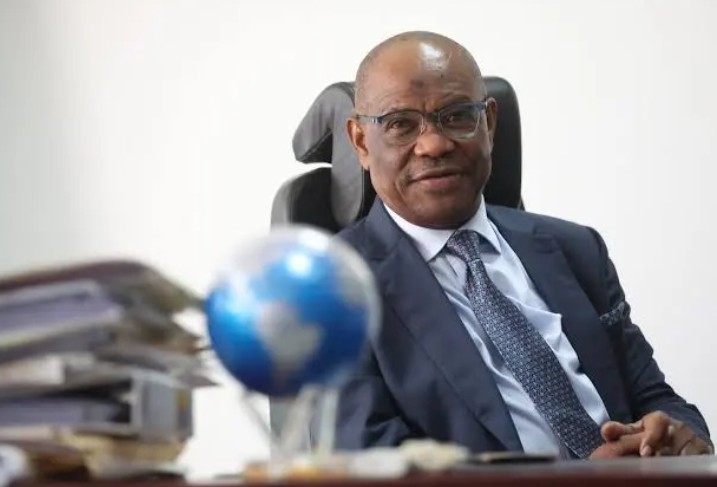
Minister of the Federal Capital Territory (FCT), Nyesom Wike, has defended the Federal Government’s decision to remove the petrol subsidy, saying the policy significantly improved the financial position of state governments that previously struggled to meet their obligations.
Speaking at a public event in Abuja, Wike said that before the subsidy was removed, many governors were forced to rely heavily on bank loans to fund government activities and development projects.
According to the minister, the financial challenges facing states before the reform were so severe that some governors had to “kneel before bank managers” in search of loans to keep their administrations running.
“Before the removal of fuel subsidy, governors were kneeling before bank managers to obtain loans. Today, many states are financially stronger because revenues have increased,” Wike said.
Wike argued that although the removal of the subsidy initially imposed economic hardship on Nigerians, the policy has strengthened public finances by increasing allocations to states through the Federation Account Allocation Committee (FAAC).
He maintained that the improved revenue profile has enabled many state governments to undertake infrastructure projects, pay salaries and meet other financial obligations with less dependence on borrowing. His comments echo those of several governors who have credited higher FAAC allocations since the subsidy removal with improving state finances.
President Bola Tinubu announced the removal of the petrol subsidy during his inauguration on May 29, 2023, describing the move as a necessary step to prevent fiscal collapse and redirect public funds to development priorities. The policy, however, triggered sharp increases in fuel prices and the cost of living, prompting widespread public criticism and calls for measures to cushion its impact.
Successive government officials have defended the reform, arguing that it has improved government revenues and reduced fiscal pressure on both the federal and state governments. Critics, however, contend that the gains have yet to translate into meaningful relief for many Nigerians grappling with inflation and rising living costs.
Wike reiterated that difficult economic reforms are sometimes necessary to place the country on a sustainable fiscal path, insisting that the long-term benefits of the subsidy removal outweigh its short-term challenges.