
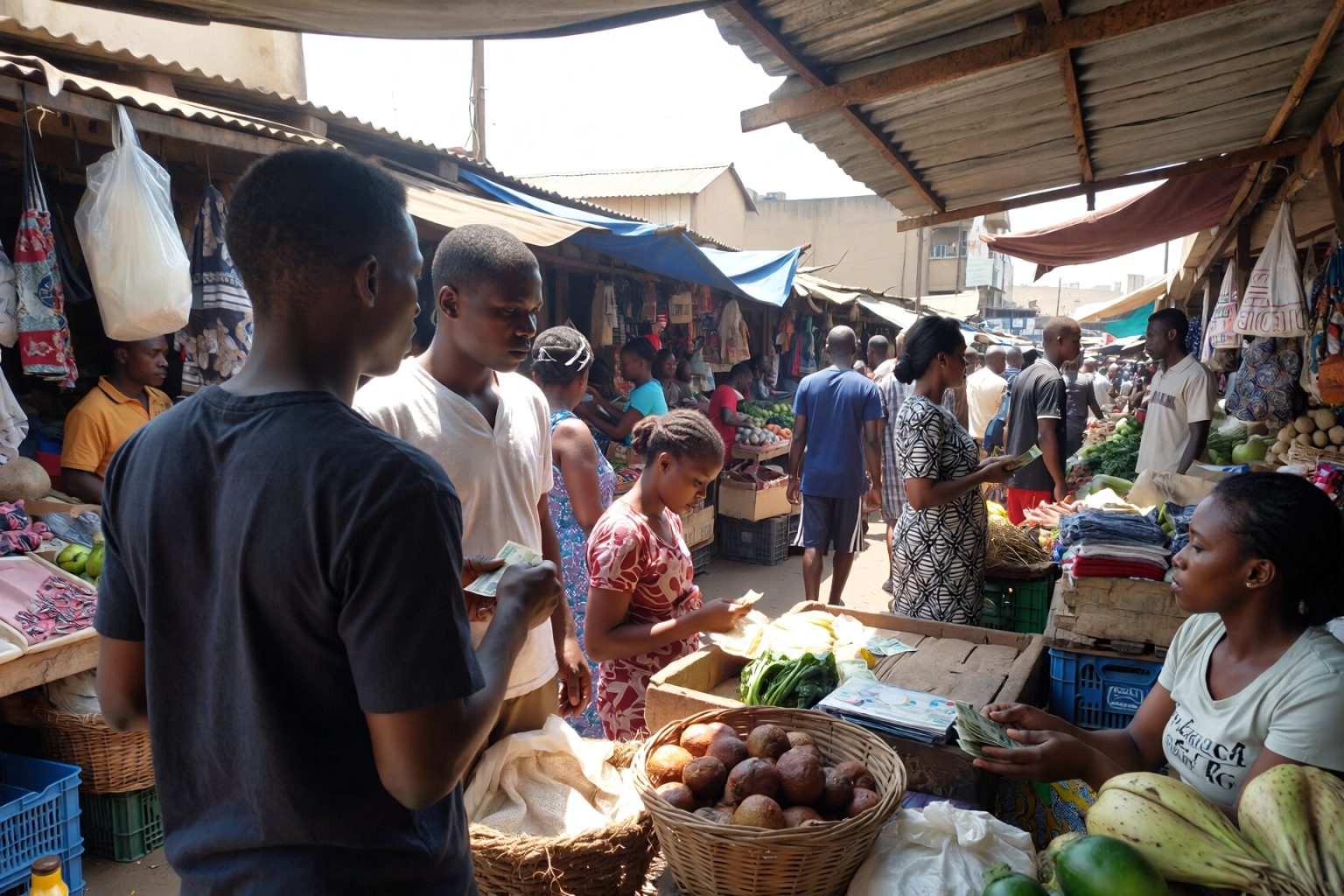
A proposed increase in Nigeria’s national minimum wage to ₦100,000 a month may sound like a significant improvement on paper, but for many workers, the figure could offer little relief once the cost of food, transportation, electricity and other essentials is taken into account.
The proposal was raised in May by Kwara State Governor and Chairman of the Nigeria Governors’ Forum, AbdulRahman AbdulRazaq, who said governors were considering increasing the current ₦70,000 national minimum wage amid rising living costs and pressure on workers.
Organised labour, however, immediately rejected the proposed figure as inadequate. Nigeria Labour Congress spokesperson Benson Upah argued that prevailing economic conditions had pushed the realistic living-wage requirement much higher, with the union suggesting that workers could need as much as ₦1 million monthly.
The disagreement reflects a wider question facing Nigerian households: how much purchasing power does ₦100,000 actually provide in 2026?
For a single urban worker, basic monthly expenses can consume virtually the entire salary before rent, healthcare, emergencies or savings are considered.
A worker spending an average of ₦1,500 daily on transportation could use about ₦45,000 in a 30-day month simply commuting to and from work. Another ₦35,000 could easily go toward basic food items such as rice, beans, garri, cooking oil and other staples.
Electricity, cooking gas, airtime and internet data could consume another ₦20,000, leaving little or nothing for other necessities.
This means a hypothetical ₦100,000 monthly income could be exhausted roughly as follows:
Transportation: ₦45,000
Basic food: ₦35,000
Electricity and cooking energy: ₦12,000
Data and airtime: ₦8,000
Total: ₦100,000
The calculation leaves no allowance for rent, school fees, healthcare, clothing, family support, emergencies or savings.
Although Nigeria’s headline inflation rate has moderated, the decline has not translated into cheaper food for many households.
The National Bureau of Statistics reported that headline inflation eased marginally from 15.93 per cent in May to 15.91 per cent in June 2026. However, food inflation moved in the opposite direction, rising to 17.52 per cent year-on-year in June.
The NBS attributed the rise in food prices to increases in commodities including tomatoes, pepper, beef, crayfish, garri, yam, cowpea and potatoes. On a month-on-month basis, food inflation rose from 2.98 per cent in May to 3.75 per cent in June.
For workers on low incomes, the distinction between slowing inflation and falling prices is particularly important. Prices may be rising more slowly, but the higher prices accumulated over previous years remain embedded in household budgets.
Transportation is another major pressure point, particularly for workers living far from their places of employment.
In cities such as Lagos, Abuja and Port Harcourt, commuters routinely spend a substantial portion of their earnings moving between home and work. Rising fuel and operating costs feed into fares charged by commercial transport operators, leaving workers with less disposable income.
For someone earning ₦100,000, spending ₦1,500 every working day on transportation would consume about 45 per cent of monthly income if calculated across 30 days.
For workers who also support children, spouses or other relatives, the pressure becomes significantly greater.
The debate over the proposed wage has exposed a sharp divide between government finances and workers’ cost-of-living realities.
Governor AbdulRazaq said the governors’ proposal was aimed at balancing workers’ welfare with the financial capacity of state governments.
The NLC, however, said ₦100,000 did not adequately reflect the economic realities facing Nigerian workers, citing inflation, currency depreciation, electricity costs, fuel prices and other rising household expenses.
The union’s position is that increasing wages without addressing the underlying drivers of prices risks creating a cycle in which workers receive nominal increases only to see their purchasing power quickly eroded.
For many low-income Nigerians, the challenge is therefore not simply the size of their salary but what that salary can actually buy.
A ₦100,000 monthly income may cover transportation and basic food for a single worker, but once rent, medical expenses, dependants and unexpected costs enter the equation, the margin disappears rapidly.
The situation also highlights why headline inflation figures alone do not always capture the financial reality experienced by individual households. Even when the rate of price increases slows, families still have to cope with the higher prices accumulated over previous years.
As negotiations over Nigeria’s minimum wage continue, the central question is increasingly shifting from how much workers earn to how much of their earnings remains after meeting basic needs.
Until food, transportation, energy and housing costs become more affordable, a six-figure salary could remain less a pathway to financial security than a monthly struggle to keep up with the rising cost of survival.